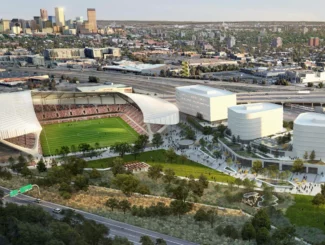

At Intercoastal, an ambitious Atlantic City development is designing a premium guest experience before the buildings, technology and operating systems are in place.
Jessica Gaffney can already picture the member arriving.
Maybe he has come down from Manhattan. Maybe he owns a condominium on the property and keeps several cars there. One of the cars is being prepared for the driving course. His family has other plans. There may be lunch, a trip to the beach, dinner later, perhaps guests arriving who need access to parts of the property he uses every day.
By then, dozens of things will have happened on his behalf. Someone may have prepared the car. Someone may know which table he prefers. Access systems may recognize where he is permitted to go. Employees may know who his guests are. The network underneath all of it will carry information among systems the member never sees.
None of that exists yet.
Intercoastal Motor Car & Yacht Club is still years from opening on what is now Bader Field in Atlantic City. Much of the experience Gaffney is responsible for, along with the artificial intelligence (AI) and customer technology meant to support it, exists today as conversations layered over drawings.
That is the opportunity. It is also the risk.
Gaffney has spent much of her career in premium hospitality, where operators usually inherit a building, a technology stack and a set of procedures and then try to improve the experience inside them. At Intercoastal, she has been brought in before those constraints harden.
Tod Caflisch, the project’s chief technology officer, is working under the same peculiar advantage. The network has not been installed. The applications have not been chosen. Fiber pathways can still be moved on a drawing rather than dug out of concrete.
Michael Binder, Intercoastal’s chief executive officer, has an even more elemental version of the problem. Before Gaffney can choreograph an arrival or Caflisch can light up a network, millions of cubic yards of material may have to be brought onto the site. The land itself has to be raised, reshaped and prepared to carry the buildings, roads, utilities and driving course that will follow.
All three have spent successful careers inside established industries. What animates them now is the chance to work where convention becomes less useful, where the next decision cannot simply be borrowed from the last project.
Their work approaches Intercoastal from different directions, but keeps meeting in the same place.
What, exactly, are they trying to make possible?
A place that does not exist yet
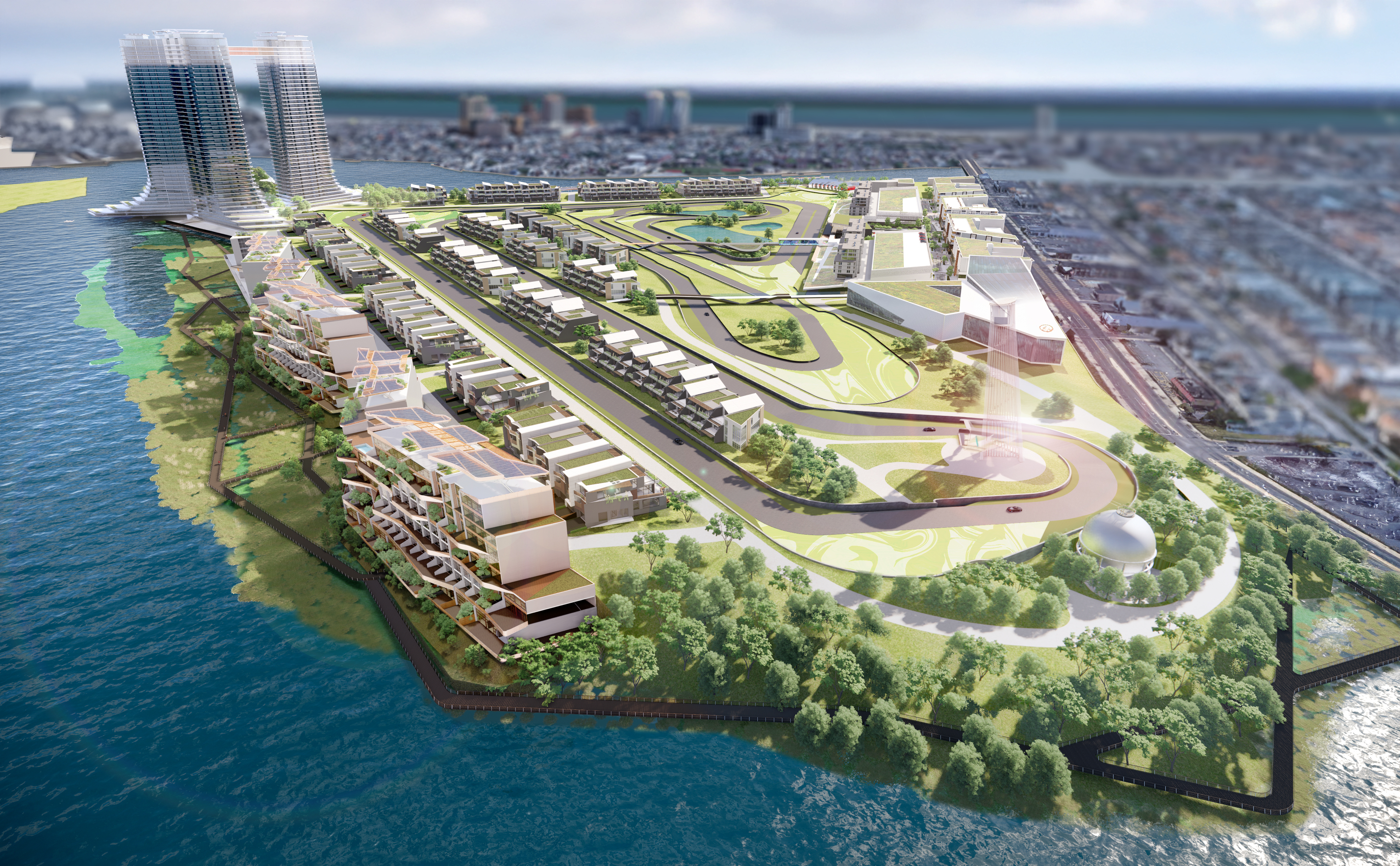
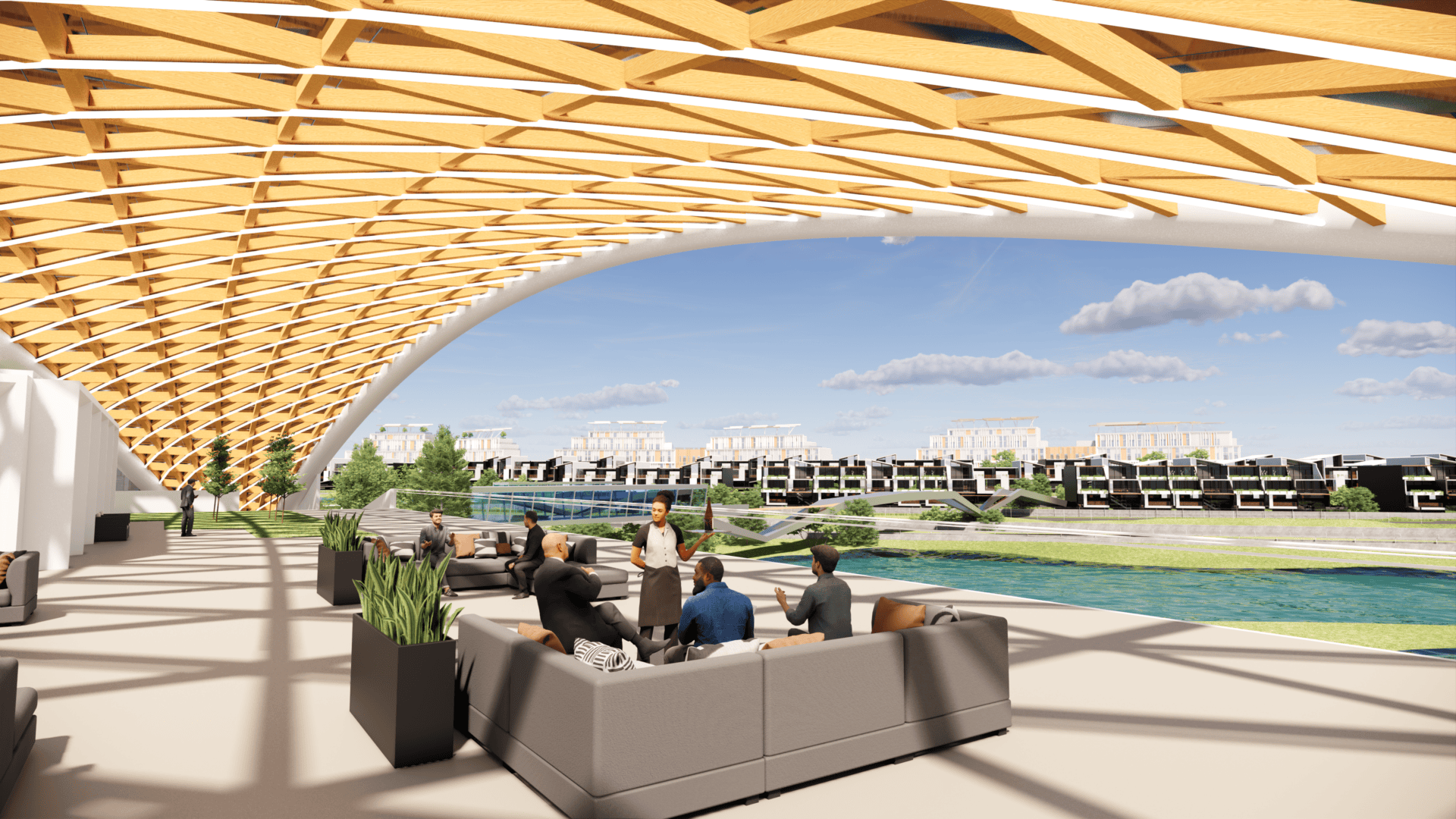
Intercoastal is planned for a 143-acre waterfront peninsula a half mile from Atlantic City’s Boardwalk and beaches. The development combines elements that usually exist separately: a 2.44-mile driving course built to FIA specifications, hundreds of luxury residences, automobile storage and service for entire collections, restaurants, retail, event space, waterfront amenities, and an automotive museum.
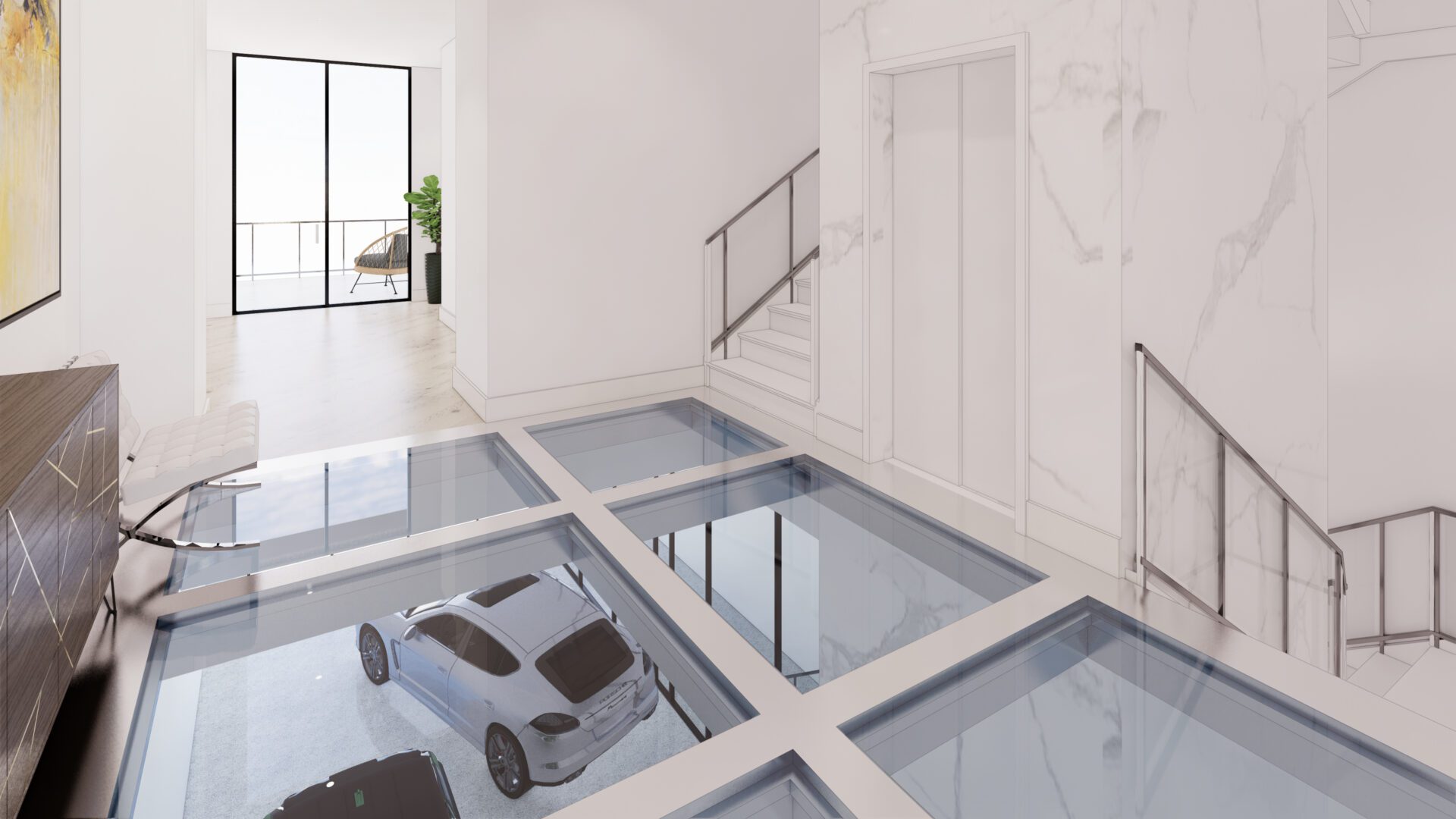
Some residences are being designed around the cars themselves. Plans include substantial private garages and high-rise units where automobile elevators could bring a prized car close to its owner’s living space. Other residences would face the water and serve families whose interests extend well beyond driving.
Binder describes the idea as an automotive lifestyle rather than a racetrack with houses around it. The distinction has influenced the project from the beginning.
Members may spend days or weeks there. Their spouses and children need reasons to stay. Restaurants, retail, waterfront recreation, events and social life have to matter even when nobody is on the course.
Binder calls the broader opportunity a blue ocean. The project takes businesses and experiences that already exist separately and combines them into something he believes a global customer base may want before many potential customers have even conceived buying it.
That possibility is part of what drew him in.
The site itself has made sure none of this begins simply.
Bader Field was an airport, and the redevelopment has had to address environmental remediation, noise, flooding, energy and regulatory approvals before conventional vertical construction can begin. Binder says the plan calls for 2.5 million cubic yards of fill to reshape and raise the property.
That elevation serves several purposes at once. It helps protect a waterfront development against extreme flood and storm conditions. It also gives designers a chance to sculpt the driving course into hills and banking rather than build another flat circuit. The resulting contours, combined with buildings around the property, can help contain engine noise.
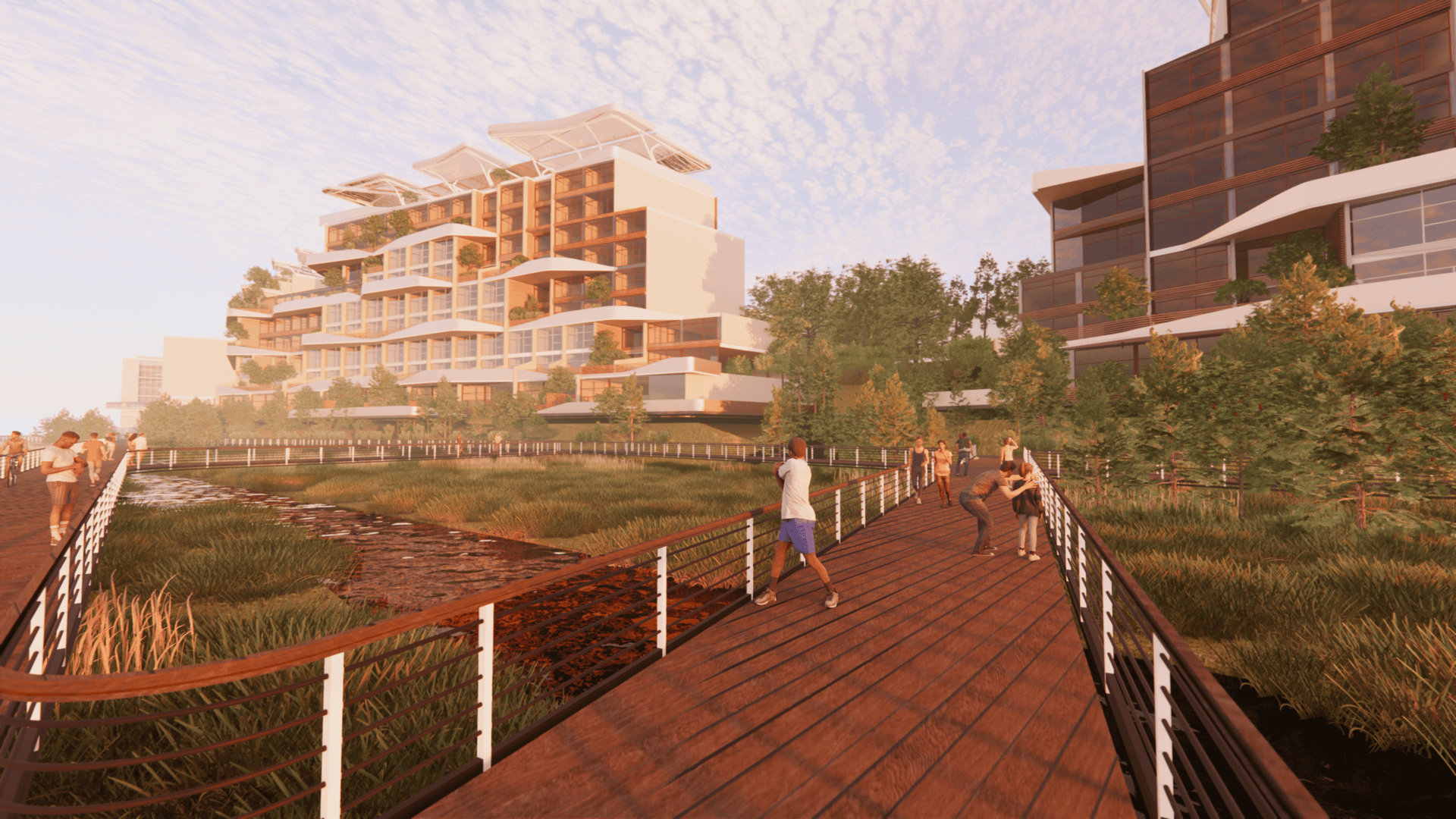
Beneath much of that new landscape, the team is planning another system that most future visitors will never see.
Thousands of geothermal wells, cycling air through a district heating and cooling system, are contemplated as part of the property’s energy infrastructure. In warmer months, hot air is pumped underground to be cooled and distributed to where it’s needed. During winter, cool air is moved through the system to be warmed and brought back into the buildings. The broader energy plan contemplates gas turbines initially, with conversion to hydrogen as part of an ambition to reach carbon neutrality several years after construction begins.
Before towers can be built, however, the newly placed soil has to settle.
Let it happen naturally, and the process can take years. Intercoastal’s construction plan calls for accelerating that compression so heavy buildings are not placed on ground that continues sinking beneath them. Different portions of the site may therefore be in different stages at once, with soil being compressed in one area while construction advances somewhere else.
Eventually, people may be living and driving in one area of Intercoastal while other areas are in the midst of construction.
Binder has spent enough time around ambitious projects to understand what those engineering decisions eventually become. A flood-elevation calculation becomes a road. A geothermal plan becomes thousands of holes in the earth. A noise study alters the shape of the course. An operating requirement that sounds abstract in a meeting eventually has to occupy physical space.
The unusual part is how many of those decisions are being made without a mature category to imitate. Intercoastal is not a residential development, a country club, a racetrack, a marina or an entertainment district. It borrows from all of them.
For Binder, that absence of precedent is not a reason to retreat toward something familiar. It is part of the appeal.
Sitting in the gray
Gaffney calls her territory the gray.
She does not own every decision that affects the guest experience, and she does not want to. Her job is to move among departments and make sure those decisions are being made against a collective understanding of the people who will eventually use the property.
I sit in the gray. I sit in the gaps between departments where my objective is to translate the guest experience and the requirements for each department, so they have an input to build against.
Jessica Gaffney
Increasingly, that translation includes AI. Her role is to define what the property needs to know about each guest, what it should do with that knowledge and where a person should take over. The aim is not a smarter interface. It is a property whose systems assemble the pieces quietly so employees can give the member their full attention.
Her career has given her plenty of experience with what happens when premium is treated as a physical product. She has worked in premium operations at major sports properties, managed premium partnerships, founded the hospitality technology company Wavework and built the technology division for the Association of Luxury Suite Directors.
Sports taught her that premium customers resist easy categorization.
A corporation may control the same suite for an entire season while bringing different guests every night. A football customer behaves differently from a golf customer. Some people value access. Others value recognition, privacy, convenience or the opportunity to do something they could not arrange by themselves.
Intercoastal multiplies those possibilities.
One member may care deeply about displaying a car inside a residence. Another may own several cars and care most about improving as a driver. Someone else may regard the driving course as secondary to having family, friends, restaurants and the waterfront in one place.
When asked which luxury operation Intercoastal should emulate, Gaffney resisted the premise that there had to be one.
She has studied the familiar benchmarks, but she does not want the project to become the Four Seasons of motorsports or the Disney of car clubs. Elements of those experiences may be worth understanding. Copying them would put boundaries around the work before the team has established what its own customers need.
We have to combine a lot of those and define our own brand experience, she said.
There is freedom in that answer, but not much protection.
A benchmark gives a team something to copy and something to blame. A blank sheet gives it neither.
Gaffney acknowledges that the opportunity is daunting. She does not know exactly what every guest journey will look like, and she does not pretend otherwise. The work now is to define the audiences, study people who execute parts of the experience well, gather evidence and begin making choices.
How does a member arrive? Who recognizes that person? What should an employee know? What information should follow the member from a residence to the marina, restaurant or automotive operation? Which moments deserve a human interaction? Which should technology handle so quietly that nobody notices?
Those questions sound like hospitality questions until one of the answers requires a doorway in a different place, a database to communicate with another database or wireless coverage where nobody remembered to put it.
Gaffney wants those discoveries made while the project is still largely lines on paper.
The drawings are cheap to change now. The building will not be.
What the network has to know
When a guest-experience requirement becomes a technology requirement, it often finds its way to Caflisch.
He has spent decades working around sports technology and construction, beginning with the San Antonio Spurs in 1990. His career has included the arena now known as Frost Bank Center, post-Katrina work with the New Orleans Hornets, Little Caesars Arena and District Detroit, U.S. Bank Stadium and Viking Lakes, along with consulting assignments on venue and mixed-use developments.
The pattern in his career is telling. When an operation became predictable, another difficult build tended to pull him away.
Caflisch likes the part where there are still questions.
He talks about technology projects as a constant learning environment, one in which every new building presents problems the last one did not. Intercoastal adds an industry he has never worked deeply inside before: high-end automotive culture and private driving.
The unfamiliarity energizes him.
Intercoastal gives him recognizable infrastructure problems at an unfamiliar scale. There will be residences, retail, restaurants, security systems, event spaces and public areas. There will also be a private driving course where members can drive extraordinarily expensive cars at speeds that turn latency from an abstract network specification into an operating concern.
New drivers are expected to train on racing simulators before using the course. Intercoastal will offer an array of simulators with different tiers of features and course realism, including versions used for training by F1 programs. Experienced drivers will use the simulators, along with coaching support, to improve their course time or drive virtual courses throughout the world.
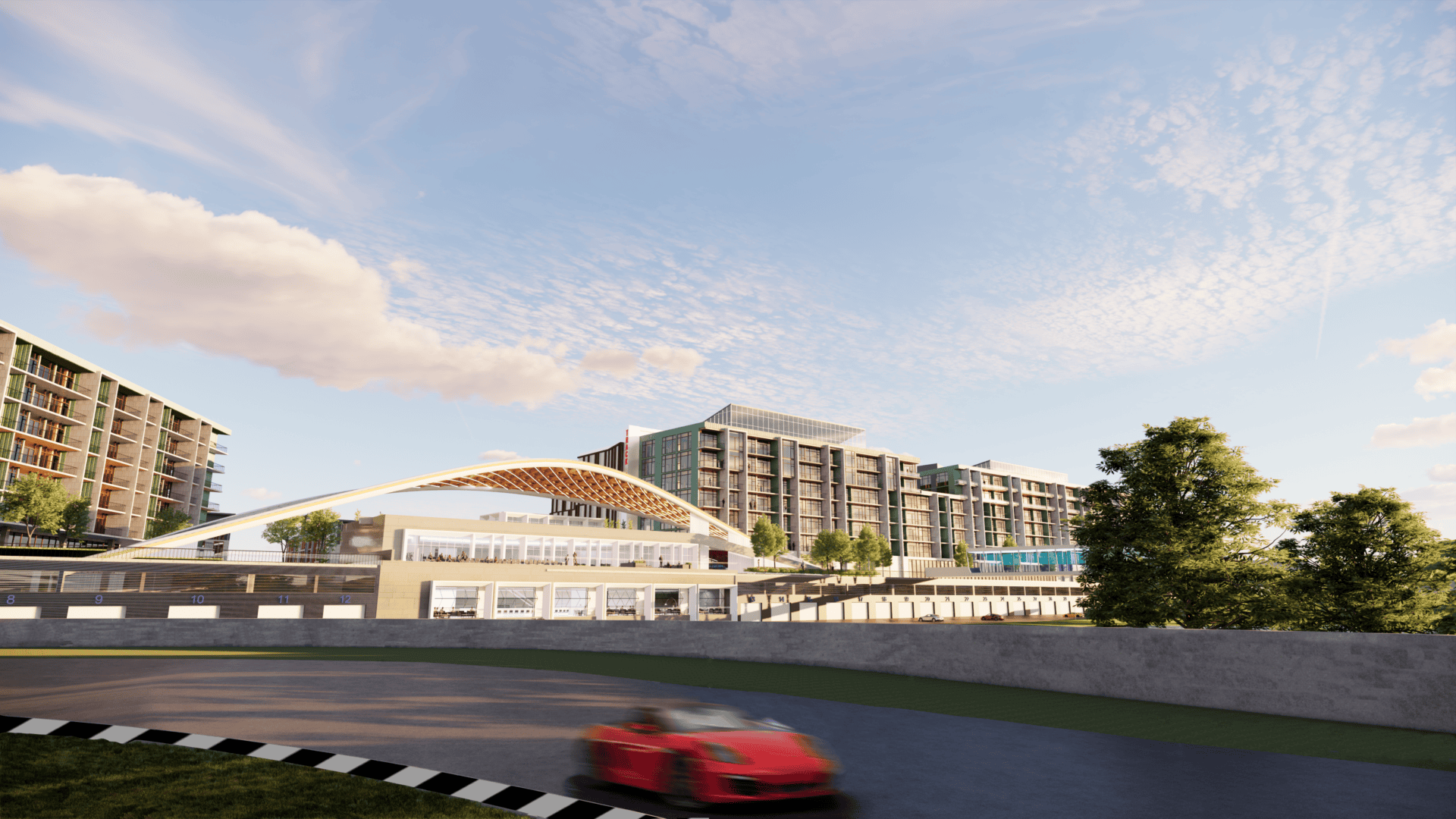
On the driving course, cars can carry sensors. The course itself can use optics and other instrumentation. Communications between drivers and an operations center may have to function instantaneously.
Caflisch talks about the environment in Formula One terms. A driver should be able to receive information about track conditions, speed and other activity without thinking about the infrastructure carrying it.
The closer the application gets to safety and control, the less attractive a long journey to a distant cloud may become. Caflisch is already considering where computing should remain local so information can move with extremely low latency.
That has consequences far below the application layer.
The property will need robust wired and wireless coverage, redundant routes, high bandwidth and room to expand. Caflisch expects multiple carriers and a network architecture capable of supporting the things the team knows about today as well as applications that may not exist when construction begins.
His premium experience from sports produces a simple standard.
They want all the bells and whistles, but they don’t want to see it. And it has to work great all the time.
Tod Caflisch
One of Caflisch’s more revealing ideas has nothing glamorous about it.
He would like to connect buildings through a subterranean service tunnel where future crews could run fiber, power, and utilities without repeatedly tearing into finished landscaping or disrupting the driving course.
The tunnel matters because the future remains unknowable.
Caflisch is already asking technology suppliers what their product road maps look like three to five years from now. He knows some decisions should wait. The harder question is identifying the infrastructure that cannot.
A software platform can be replaced.
A missing pathway underneath a finished development is another matter.
Once the driving course opens, digging it up to add capacity will not simply inconvenience a contractor. It could take one of the property’s central experiences away from the people paying to use it.
Much of Caflisch’s work therefore consists of making commitments without pretending to know the future. Put enough structure in place to support what comes next. Leave enough openness that the next thing does not have to resemble today’s answer.
That requires experience, but it also requires a willingness to admit where experience stops helping.
The polished floor
Somewhere between Gaffney’s customer journey and Caflisch’s network sits a mechanic.
Binder likes this example because it strips premium hospitality of some of its abstraction.
A customer may hand that mechanic a car worth millions of dollars. The service bill itself can reach tens of thousands of dollars. The technical work has to be excellent, obviously, but Binder thinks the experience begins before the mechanic touches the engine.
The facility should look right. The tools should be right. The employee should be trained to deal with someone handing over a prized possession.
Even the concrete floor should be polished and kept pristine.
The floor communicates something.
That is the kind of detail that keeps Intercoastal’s premium ambitions from becoming merely a software discussion. Technology can tell the organization who the customer is, help schedule the car, record its history, or alert an employee that the owner has arrived. Someone still has to turn the wrench.
Binder believes that standard must spread across the property.
This is going to be so much more than just driving your car around the track.
Michael Binder
He describes collectors as people who may sometimes come precisely because they do not want to stare at a screen. They want to talk to other collectors. They may join a dinner about carburetors, drive with other owners along the Jersey Shore, return for lunch and spend the rest of the day doing something that has little to do with the car. Community is essential to the Intercoastal experience.
The technology is supposed to support that lifestyle, not occupy the center of it.
That requires people. Technology’s job is to give them the time.
Binder expects the organization to grow across auto care, construction management, finance, marketing, security, hospitality and other functions as development progresses. Architects, environmental specialists, energy engineers, HVAC engineers and landscape designers are already part of the work.
He is emphatic that premium experience does not belong to Gaffney alone.
Neither does technology belong solely to Caflisch.
The people designing the physical project, the people operating it and the people specifying its systems all have ways to make the experience better or quietly undermine it.
No game clock
The sports backgrounds shared across much of Intercoastal’s leadership supply a useful reference point.
A football stadium may be fully activated for only a small number of hours each year, Binder notes, yet the expectations during those hours are severe. Nobody wants to miss a play because a restroom line moved too slowly. A payment problem that lasts thirty seconds can become part of someone’s memory of an expensive day.
Sports venues learned to obsess over friction because many people encounter the same problem at once.
Intercoastal will distribute the problem over time.
A member might arrive on Friday and still be there Wednesday. There is no kickoff that resets the operation. Restaurants, residences, automotive service, the waterfront, security and concierge functions have to behave coherently across several days rather than during a few intensely managed hours.
Gaffney describes the difference through an inversion of the business she knows.
At a stadium, game day is the product and hospitality supports it.
At Intercoastal, hospitality is the product.
A member may drive a car, eat dinner, invite friends, spend the night and return to the course the next morning. The organization must understand that as one relationship even if five different departments are involved.
Gaffney imagines the experience as a ribbon running through the property, connecting valet, marina, restaurants, automotive repair, training, residences and services still being conceived.
That ribbon will depend on technology stitching it together out of sight. It will also require a service culture.
Gaffney expects different jobs to require various kinds of training rather than a generic luxury-hospitality course applied to everyone. A concierge, technician and restaurant employee perform different work. The common element is the standard they are expected to deliver and the information and tools provided to help them deliver it.
AI is where the service culture and the technology meet. Gaffney sees AI doing the assembly work behind the scenes: connecting what the organization knows about a member, anticipating what that member will need and putting the right information in front of the right employee at the right moment. It can also help monitor how well those standards are being met. She can imagine it helping the organization evaluate performance closer to real time and adjust when reality diverges from the intended experience.
She is deliberately unwilling to choose those tools yet.
The use case comes first.
Before the concrete hardens
A project this large encourages big thinking. Renderings make that easy.
Cars sweep around the course. Towers rise near the water. Restaurants, residences and public spaces fill the former airfield. The finished image suggests that somebody already knows exactly what the place is going to be.
The conversations with Gaffney, Caflisch and Binder suggest something more interesting.
They know what they want to accomplish. They do not pretend to know every answer required to accomplish it.
That uncertainty does not seem to bother them as much as it might bother people whose careers have taught them to protect precedent.
Binder is attracted to a blue ocean because no established category quite contains the idea. Gaffney is trying to define a premium experience without selecting another luxury business as the template. Caflisch is designing infrastructure for technology that may not exist when the project opens.
Each has enough experience to understand the risks of getting a decision wrong. None seems particularly interested in letting that experience become a fence around what might be possible.