
Why carriers still finance some stadium networks, why others do not, and how the economics of connectivity are changing
By Pat Coyle
For years, professional sports teams enjoyed an unusual arrangement with the wireless companies that wanted to reach their fans. Verizon, AT&T and Sprint were not merely suppliers of cellular service. They were prospective sponsors, enterprise partners and, frequently, sources of capital for the expensive wireless infrastructure that made their networks work inside stadiums.
The logic seemed straightforward. Teams controlled buildings where tens of thousands of mobile subscribers gathered. Carriers needed those customers to have service, particularly when the buildings were full. A wireless company with billions of dollars in annual revenue could finance a distributed antenna system, or DAS, and receive better service for its customers and a commercial relationship with a prominent sports property.
From the team’s side, the DAS could appear remarkably close to free.
That expectation has become harder to sustain.
In conversations with companies involved in stadium technology design, construction and financing, Stadium Tech Report has heard a recurring concern: wireless carriers have become less willing to finance DAS installations at smaller venues, particularly properties they consider below Tier 1.
The accounts are consistent, but difficult to measure. Carrier agreements are generally private, financing arrangements vary widely, and there is no universally accepted definition of a Tier 1 stadium. No public database establishes how much carrier investment has shifted among different categories of venues.
Still, the accounts raise a question. Why would carriers continue investing millions of dollars in cellular infrastructure at some stadiums while becoming less interested in others?
Stadium Tech Report examined more than 20 publicly documented venue projects, carrier agreements and development plans, along with financial disclosures from companies that own and finance wireless infrastructure.
The arrangements we found fell into four broad categories: carrier-financed networks, independently financed neutral-host systems, venue-owned infrastructure, and technology-as-a-service agreements. In some, carriers supplied the capital. In others, independent infrastructure companies financed networks against payments from participating carriers. Some venues retained ownership, sometimes with carrier funding and specialist management. And a newer approach bundled infrastructure into long-term technology service agreements.
These arrangements are not mutually exclusive. The same companies can play different roles in different deals, and ownership does not necessarily determine who finances or operates a network. The different financial structures help explain why a stadium might attract investment from one party but not another.
Carriers still make substantial stadium investments. In 2024, the University of Nebraska considered an agreement under which Verizon would install and operate a neutral-host DAS at Memorial Stadium, with facilities estimated at $25 million to $30 million and no construction capital required from Nebraska Athletics. The Buffalo Bills announced Verizon as the owner of the neutral-host DAS at their new Highmark Stadium, part of a broader relationship encompassing sponsorship, business services and consumer marketing.
These arrangements emerged from commercial incentives that have changed considerably since carriers began making large investments in stadium connectivity.
When coverage was worth the investment
In 2005, Verizon Wireless finished the year with 51.3 million customers, having added more than 7.5 million during the preceding twelve months. Its wireless business was growing rapidly, along with an industry that was still persuading millions of Americans to become mobile subscribers.
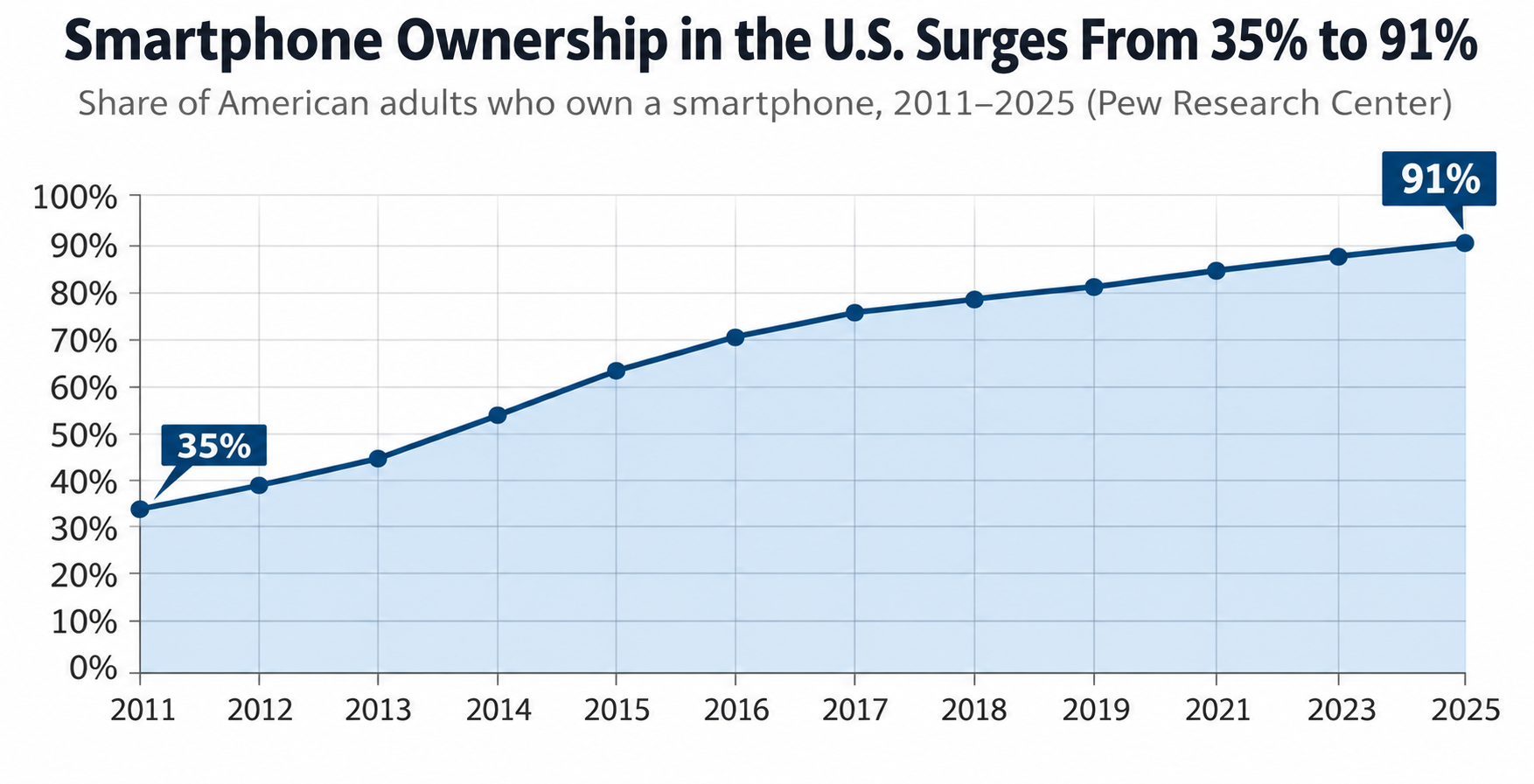
Smartphones would soon accelerate that growth. When Pew Research Center began measuring smartphone ownership separately in 2011, 35% of American adults owned one. By 2025, that figure had reached 91%.
For carriers, those years represented an extraordinary opportunity. New customers were arriving in large numbers. Mobile data consumption was growing. Operators were building successive generations of technology while competing to convince subscribers that their networks offered superior coverage and performance.
A crowded stadium was a particularly unforgiving place for that competition.
Tens of thousands of people could arrive within an hour, gather inside a difficult radio environment and begin using their phones simultaneously. A network that worked perfectly outside the building might struggle once the stands filled.
A phone could show a strong signal and still fail to send a photograph or load a website. Coverage was only part of the problem. The network also needed enough capacity to serve concentrated demand.
Poor performance created an obvious customer-service problem, potentially affecting thousands of subscribers in the same place at the same time.
Investing in somebody else’s stadium served the carrier’s business. Reliable service supported customer satisfaction and retention. High-profile venues offered opportunities to demonstrate network quality. Sponsorship relationships could reinforce those benefits with marketing rights, hospitality and access to prospective customers.
A carrier might value the same stadium as a dense concentration of subscribers, a demanding network environment, an enterprise customer and a marketing property. Some of those benefits could support the infrastructure investment even if the sponsorship itself did not.
The carrier’s position has changed as the wireless market has matured.
Today, the three national carriers compete in a country where smartphone ownership is widespread. Their capital budgets remain enormous, but so do the demands on those budgets. Money can go toward spectrum deployment, fiber, cell towers, small cells, network modernization, fixed wireless and other projects across the country.
Building a DAS in a stadium competes with those opportunities.
A carrier may be able to afford a $10 million or $20 million stadium network while finding better uses for the same capital elsewhere.
The value of the investment can also vary considerably from one stadium to another. And carriers are not the only companies making that calculation.
When the network became a real estate business
Neutral-host infrastructure created another way to finance stadium connectivity.
The underlying business is easier to understand as real estate than as telecommunications.
Instead of three carriers installing three separate networks, an independent infrastructure company can build shared infrastructure and charge carriers to use it.
Verizon, AT&T and T-Mobile become tenants. The infrastructure owner supplies capital, maintains the shared system and collects recurring payments.
By the late 2000s and throughout the following decade, companies such as Boingo Wireless and Mobilitie had built businesses around acquiring long-term wireless rights at airports, stadiums, convention centers and other large public venues.
Boingo, while it was still publicly traded, provided an unusually clear picture of the economics.
At the end of 2019, the company reported 73 live DAS venues containing approximately 38,100 nodes, the antennas and associated endpoints that distribute cellular signals throughout a property. Its carrier-services business included revenue from DAS access, Wi-Fi offload and other infrastructure.
In 2019 alone, Boingo reported $36.4 million in DAS access-fee revenue, an increase of almost 50% over the preceding year.
The appeal of the model lay partly in the opportunity to add tenants. A substantial portion of the shared infrastructure had to be installed whether one carrier used it or three. Once that investment was made, adding another participating carrier could produce additional revenue without requiring an entirely separate network.
The same build-once, lease-to-multiple-customers principle has supported the communications tower business for decades.
A stadium with enthusiastic fans might still be unattractive if only one carrier was prepared to sign an agreement. Conversely, a property could become more attractive to investors when a second or third carrier joined, even if the number of seats remained unchanged.
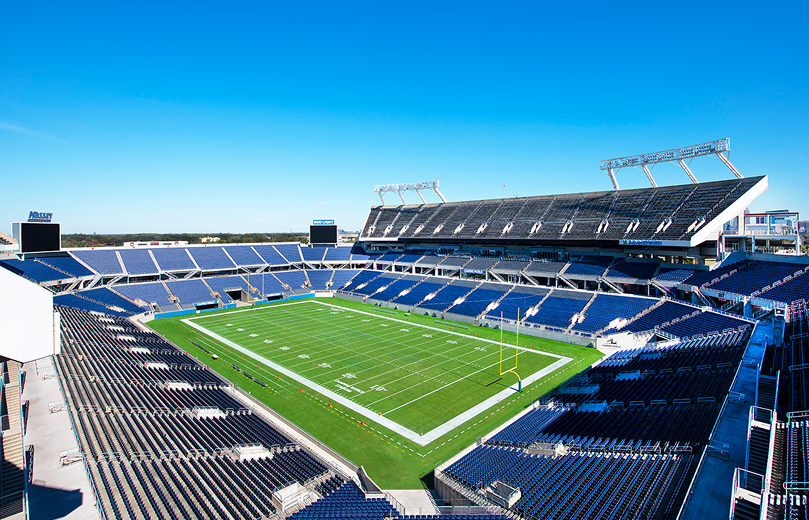
At Camping World Stadium in Orlando, that financial value became unusually visible.
In 2016, Mobilitie proposed financing a $2.6 million high-density Wi-Fi installation if the City of Orlando would surrender its existing right to approximately 30% of gross carrier revenue from the stadium’s DAS.
The company’s financial projections put a price on what the city would give up. Over ten years, Orlando’s share was projected at approximately $1.86 million with two participating carriers and approximately $2.84 million if a third carrier joined.
Those figures were projections in a commercial proposal, not verified revenue ultimately received by the city.
The additional carrier was worth almost $1 million in projected revenue to Orlando over the period because another tenant would be paying to use shared infrastructure.
Mobilitie considered that revenue stream valuable enough to propose exchanging millions of dollars in new Wi-Fi infrastructure for the city’s interest in it.
The arrangement gave the city’s DAS rights a financial value independent of the stadium’s sponsorship inventory, tied to the number of participating carriers, their contractual payments, and the costs of maintaining the network.
When the math changes
Shared infrastructure is attractive when enough customers pay to use it. The difficulty comes when expected customers disappear, reduce their commitments or become unwilling to support the required investment.
The consequences were visible after T-Mobile acquired Sprint in 2020.
Before the merger, the two companies maintained overlapping networks and leased space at many of the same tower locations. Combining their operations eliminated the need for some of those duplicate leases.
For tower owners, the change had a direct financial effect. A tower could remain operational and useful while losing revenue because one of its tenants no longer needed the space.
The number of national U.S. wireless carriers had also fallen from four to three, reducing the potential tenant pool for shared infrastructure.
Crown Castle, one of the country’s largest communications infrastructure companies, offered another illustration in 2024.
After reviewing its fiber and small-cell operations, the company changed its investment priorities. It favored projects that could use existing infrastructure and reduced emphasis on new construction farther from its established network.
Crown Castle said the changes would reduce planned 2024 capital expenditure in its fiber segment by approximately $275 million to $325 million. It subsequently reported agreements with customers to cancel roughly 7,000 planned greenfield small-cell nodes from its backlog.
These decisions did not concern stadium DAS specifically. They illustrate the investment discipline applied by companies that finance wireless infrastructure.
A simplified example shows how quickly the calculations can change.
Suppose a shared network requires $10 million in initial capital and is expected to generate $700,000 in annual cash flow after routine operating expenses. That represents an initial cash yield of 7%, before accounting for taxes, future capital expenditure, financing structure or the time value of money.
An investor requiring an initial yield of 6% might find the project attractive. Another requiring 9% would not.
The illustration is hypothetical, but the effect is familiar to infrastructure investors. Higher financing costs, reduced tenant commitments or increased return requirements can change the attractiveness of a project without changing its physical requirements.
Such decisions are difficult to observe in stadium DAS. Verizon, AT&T and T-Mobile do not publish venue-level investment models. Independent neutral hosts rarely disclose the full commercial terms of individual installations.
The industry nevertheless has a vocabulary for distinguishing the properties considered attractive enough to command substantial investment.
The trouble with Tier 1
Stadium executives often hear that carrier financing is available for Tier 1 properties but is increasingly difficult to obtain for Tier 2 and Tier 3 venues.
The classifications suggest clearly defined categories. In practice, industry participants use them in different ways.
Seating capacity matters. So can metropolitan population, event frequency, network traffic, carrier market share and the commercial importance of the team.
A stadium might have relatively few seats and a demanding event calendar. Another might have considerable capacity but limited utilization. A building in a smaller metropolitan market could still attract a concentration of subscribers that makes it unusually important to a particular carrier.
Defining Tier 1 simply by seating capacity or market size is therefore unsatisfactory.
It can also produce a circular explanation: carriers finance Tier 1 stadiums because they are valuable, while the category is often applied to stadiums that carriers already regard as valuable.
Nebraska provides a revealing example.
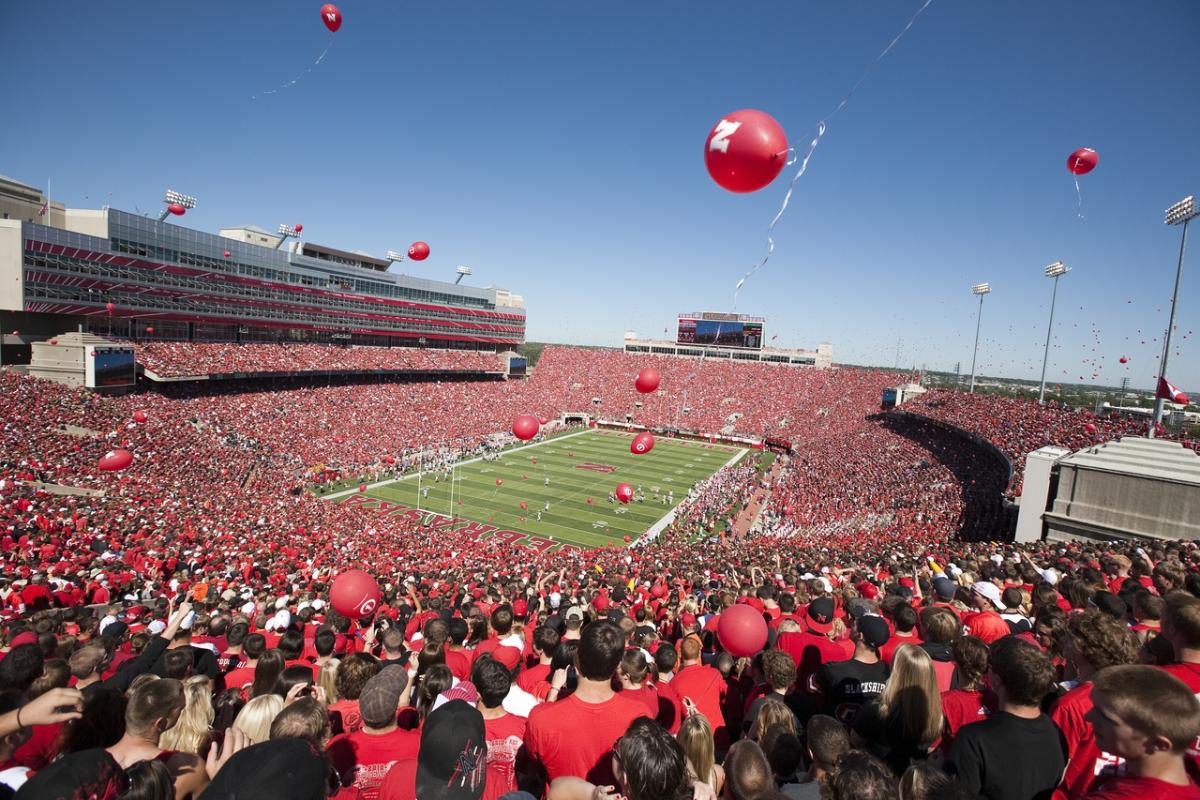
Memorial Stadium in Lincoln is not located in one of the country’s largest metropolitan markets. But Nebraska football produces a concentration of demand unlike most properties in a market that size.
The stadium holds more than 80,000 people, and its consecutive sellout streak dates to 1962. During football season, large crowds gather at a single property where reliable cellular connectivity is important to spectators and stadium operations.
In June 2024, the University of Nebraska Board of Regents considered an agreement to establish a new neutral-host DAS at Memorial Stadium.
The university’s materials explained that Athletics had engaged a consultant to develop a new cellular strategy. The proposed arrangement designated Verizon as the lead carrier, responsible for installing and operating facilities estimated at $25 million to $30 million.
Other carriers would negotiate their participation through Verizon. Verizon and participating carriers would be responsible for specified future technical and commercial upgrades. The agreement contemplated rent payments to Nebraska Athletics at commercially reasonable rates.
Under the proposed terms, Nebraska would contribute no construction capital but would grant access and commercial rights to the property. Verizon would assume substantial infrastructure responsibilities and gain the opportunity to serve its customers and support other participating carriers.
The $25 million to $30 million figure appeared in the university’s proposed 2024 terms. Those materials do not establish the final executed contract or the amount ultimately spent.
Even without those details, the proposed arrangement shows the scale of investment Nebraska was positioned to attract.
Buffalo offers another example, with a broader commercial relationship.
In May 2025, the Bills announced Verizon as the official 5G network and a Founding Partner of their new Highmark Stadium.
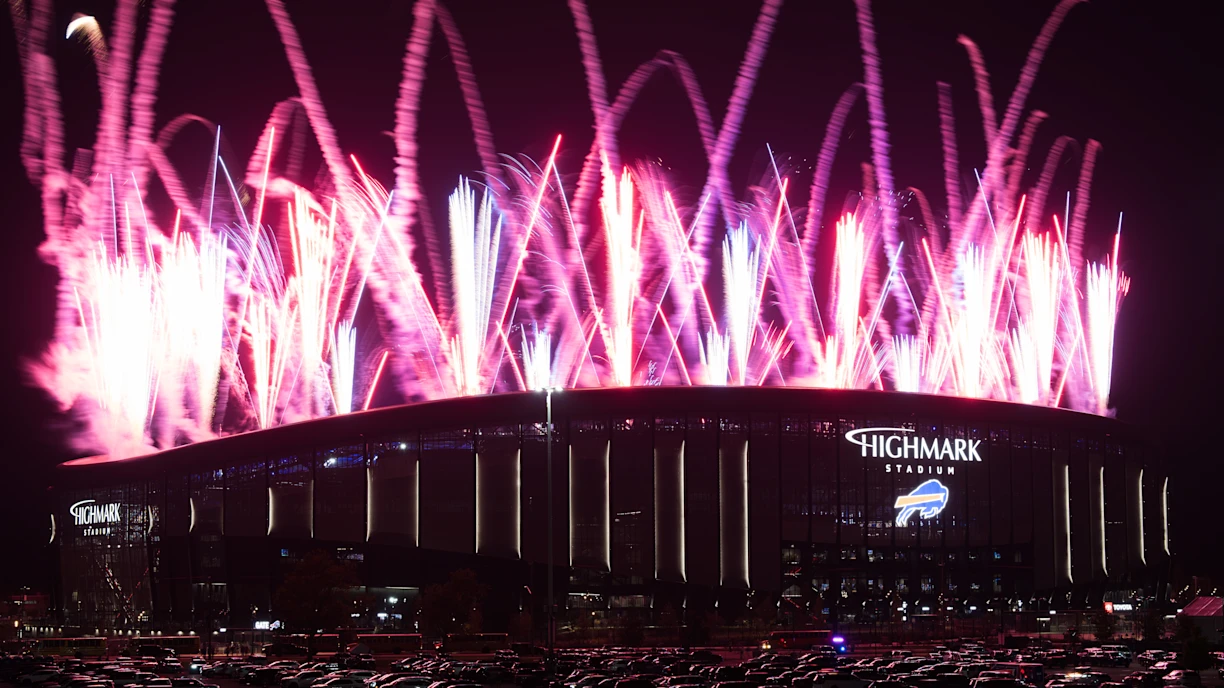
Verizon would own the stadium’s neutral-host DAS. But the relationship extended beyond cellular infrastructure.
It included Verizon Business technology and services, customer experiences, marketing activations and other commercial rights. Verizon also supplied temporary Wi-Fi during stadium construction.
The Bills offered sponsorship inventory, customer engagement opportunities, and access to the stadium’s technology environment. Verizon brought network capabilities, customer relationships, technical expertise and capital.
The public announcement did not disclose how the parties valued the different components. It does not establish that sponsorship benefits alone justified the DAS investment, or that the cellular system would generate an attractive standalone return.
At a property like Highmark Stadium, however, the carrier can evaluate the infrastructure within a commercial relationship extending well beyond the cellular network.
That combination may be harder to assemble elsewhere. A team may offer a compelling sponsorship opportunity without necessarily offering enough network or enterprise value to justify the additional capital.
Other businesses may find a different financial proposition in the same infrastructure.
When the stadium owns the asset
A neutral-host DAS is a shared cellular system designed to serve multiple carriers. The term describes how the network is used, rather than who owns or finances it.
The owner can be a carrier, an independent infrastructure company or the venue itself. Ownership, construction financing and ongoing operations are separate decisions, often involving different parties.
Under venue ownership, the team or property owner retains the infrastructure while contracting with specialists to design, build, operate and upgrade it. Depending on the commercial agreements, carriers may finance part or all of the initial construction.
The venue can receive payments from participating carriers and retain control over the asset. Its financial exposure depends on the contracts governing construction costs, carrier participation, operating responsibilities and future upgrades.
Wrigley Field provides a documented example.
AFL Wireless Serviceshas worked with the Chicago Cubs for more than a decade. According to Cubs vice president of technology Steve Inman, Wrigley was the first Major League Baseball venue to own its DAS.
The ownership arrangement was established during the ballpark’s modernization, with AFL helping secure carrier commitments for the network. Inman has described the club’s objective as upgrading its wireless infrastructure without a financial burden while retaining control of the system.
According to AFL, the arrangement has generated recurring revenue for the Cubs. The club retains ownership of the infrastructure, while AFL has managed successive upgrades and coverage expansions.
At Hollywood Park in Inglewood, California, a similar principle operates within a much larger property.
SoFi Stadium is the centerpiece of a nearly 300-acre sports and entertainment development that includes YouTube Theater, residences, retail and other commercial uses.
Hollywood Park’s owners chose to develop a common technology foundation serving the stadium and the broader campus. That infrastructure includes shared fiber and networking resources supporting numerous applications.
The property has also pursued a venue-owned neutral-host DAS strategy, with specialist partners involved in network deployment and expansion.
The arrangement has accommodated successive generations of cellular technology. In a June 2026 Stadium Tech Report case study, AFL Wireless Services reported expanding the stadium bowl’s C-band deployment from 189 to 264 zones as part of a broader capacity upgrade. The work involved stadium and parking environments, rather than an expansion into the district’s residential or retail buildings.
A common fiber backbone can support DAS, Wi-Fi, security, building systems, broadcast, internet connectivity and new applications as the district develops. Spare capacity can reduce the cost of future expansion, while common pathways can avoid the duplication associated with separate infrastructure for each system.
Some of those benefits are realized through avoided construction costs or improved operating efficiency rather than payments from carriers. Other advantages arise from maintaining control over infrastructure that can serve multiple buildings and applications.
The owner therefore has reasons to value the infrastructure beyond cellular service during football games. Its investment calculation can encompass the stadium and the surrounding development, while an independent neutral host may rely primarily on payments from participating carriers.
Venue ownership does not eliminate the need to finance construction or fund future upgrades. Some stadium owners may prefer to direct their own capital toward premium seating, concessions or other investments, while negotiating carrier contributions and ongoing technical responsibilities through separate agreements.
A different arrangement allows the venue to obtain the technology without financing the entire installation itself.
A different way to supply the capital
At Inter Miami’s Nu Stadium, the financing relationship extends beyond cellular DAS.
The 26,700-seat venue is part of Miami Freedom Park, a 131-acre development. The stadium’s technology program includes neutral-host cellular, high-density Wi-Fi 7, IPTV, audio and a converged fiber plant serving broadcast, wireless and IT requirements.
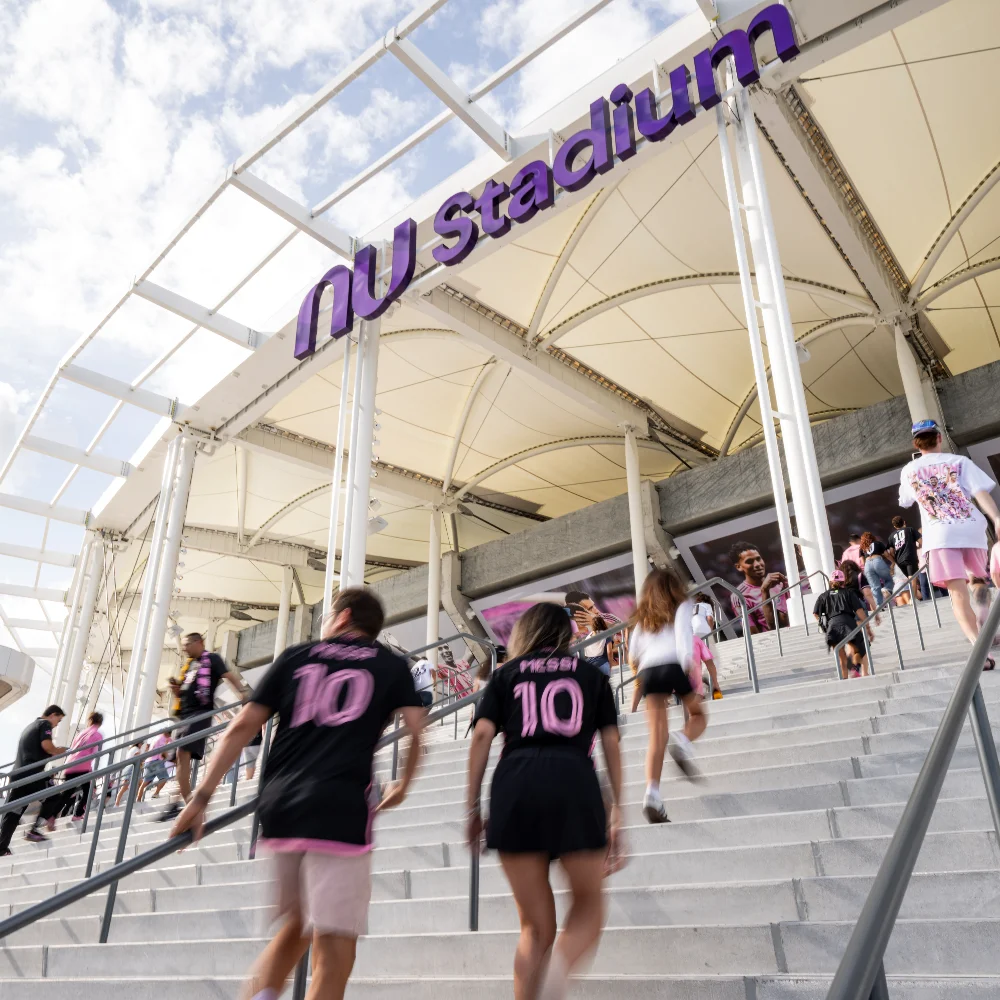
Boldyn Networks says it supplied the upfront capital required to deploy the technology platform through a Technology as a Service arrangement, avoiding a significant initial capital expenditure by the club.
Boldyn also assumes responsibility for operating and managing the technology platform over time.
The club obtains the technology through a long-term commercial relationship, preserving capital that can be used elsewhere. Boldyn, in turn, expects to recover its costs and earn a return through the agreement.
The specific payments, revenue rights, ownership provisions and risk allocation have not been publicly disclosed. Without those details, the ultimate financing cost to Inter Miami and the investment return to Boldyn cannot be determined.
The arrangement may be supported by payments from the venue, participating cellular carriers or other commercial rights. Boldyn has not disclosed which revenue sources apply or how much each contributes.
These structures can combine elements of carrier funding, neutral-host operation and outsourced technology management. Their financial characteristics depend on the contract rather than the label applied to the service.
And regardless of which party finances the installation, the cost of operating and upgrading the system influences the economics for years afterward.
The cost of what gets built
The financing arrangement determines how the cost of a DAS is shared among carriers, infrastructure providers and venue owners. Equipment selection helps determine the size of that investment, its operating expenses and the cost of future upgrades.
Manufacturers including Andrew, JMA and SOLiD offer different approaches to DAS infrastructure, while antenna specialists such as Matsing and Galtronics supply technologies for distributing signals throughout stadiums. Their products influence the amount of equipment, cabling, power and installation labor required, along with network performance and the ability to accommodate new spectrum and additional carriers. Those choices must meet carrier technical requirements while also addressing the cost and reliability considerations of the companies financing and operating the system.
A system that costs less to install may require more maintenance or prove more expensive to upgrade. A higher initial investment may reduce future costs, although the outcome depends on the architecture, equipment and operating conditions. Those tradeoffs become part of the financial calculation regardless of who owns the network.
What happened to the free DAS?
The accounts that prompted this investigation described wireless carriers becoming less willing to fund DAS installations at smaller stadiums and arenas.
Our review cannot quantify that change or establish a universal threshold separating properties that attract carrier capital from those that do not.
It does reveal why financing decisions can differ so substantially.
Nebraska’s football audience and Buffalo’s broader commercial relationship help explain why both properties attracted major Verizon commitments. Boingo’s financial disclosures and Orlando’s proposed agreement illustrate the value of recurring carrier payments to independent infrastructure companies. Wrigley Field and Hollywood Park demonstrate the advantages of venue ownership, while Miami illustrates how a team can obtain a broad technology platform through a long-term financing and service arrangement.
The business considerations behind those investments continue to evolve. The number of national carriers has fallen, subscriber growth has matured, wireless technology has advanced and infrastructure investors have changed their requirements for deploying capital.
A team’s negotiating position can change, too. Its event calendar, audience, sponsorship opportunities and surrounding development may make the property more valuable than it was when the original system was installed. Other changes can work against it.
For teams accustomed to treating DAS as part of a sponsorship discussion, the financial calculations may be unfamiliar. A stadium’s large audience and valuable commercial rights can make it an attractive carrier partner. But those assets must compete with other demands on the carrier’s capital, and they may not support the same level of investment they once did.
The venue controls access to the property and its audience. Carriers control licensed spectrum and subscriber relationships. Independent infrastructure companies and service providers bring other forms of capital and expertise. The value of each contribution depends on the circumstances of the deal.
For years, carrier funding allowed stadium owners to avoid examining much of the financial machinery behind their networks. The carrier wrote the check, the equipment was installed and the relationship could look like an unusually generous sponsorship.
The money was invested because the property offered a business opportunity.
Stadium DAS was never free.