
A new J.D. Power study of airport passengers offers stadium operators a useful way to think about the economic value of reducing friction inside a venue.
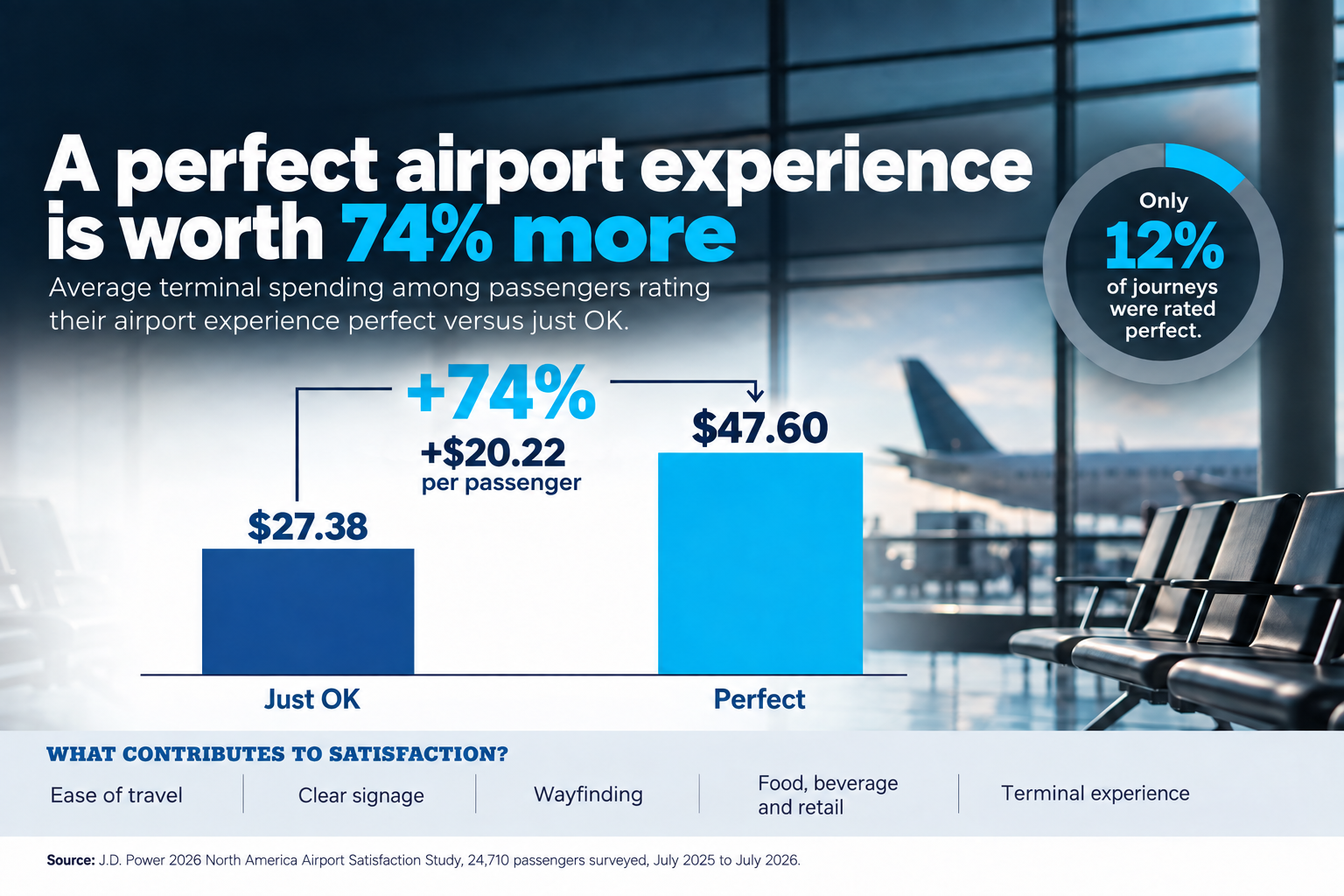
The 2026 North America Airport Satisfaction Study, released Sept. 16, surveyed 24,710 passengers and found that travelers who rated their airport experience as perfect spent an average of $47.60 in the terminal, $20.22 more than passengers who described the experience as just OK. Perfect experiences occurred on only 12% of journeys. (JD Power)
That works out to a 74% spending difference between the two groups, $47.60 versus $27.38.
The study does not tell us that stadium fans would behave the same way. Airports and stadiums are different businesses. But the findings provide independent evidence for a broader idea that should be familiar to venue operators: usability may have revenue value.
J.D. Power also provides some clues about what contributes to a better experience. Ease of travel is the most important of the seven dimensions it measures. Clear signage and wayfinding are among the design attributes most strongly associated with satisfaction, while food, beverage and retail satisfaction rose eight points year over year. (JD Power)
The construction findings may be especially relevant to stadium operators. J.D. Power says overall airport satisfaction increased significantly in 2026 as dozens of major capital improvement projects reached completion. The study notes that nearly every airport category has undergone substantial redevelopment aimed at streamlining passenger flow, expanding food and beverage options and improving the overall experience. All of the highest-ranked airports had recently completed, or were close to completing, multi-year capital programs costing more than $1 billion. (JD Power)
That creates a useful parallel with the stadium industry, where new construction and major renovation projects are also widespread. The airport findings do not prove that stadium capital projects will produce the same results, but they do support a question worth asking: when owners redesign circulation, concessions, premium spaces, signage and other fan-facing systems, are they also creating measurable gains in satisfaction and spending?
The broader stadium parallel is straightforward because airports and stadiums share a basic economic constraint: friction consumes selling time.
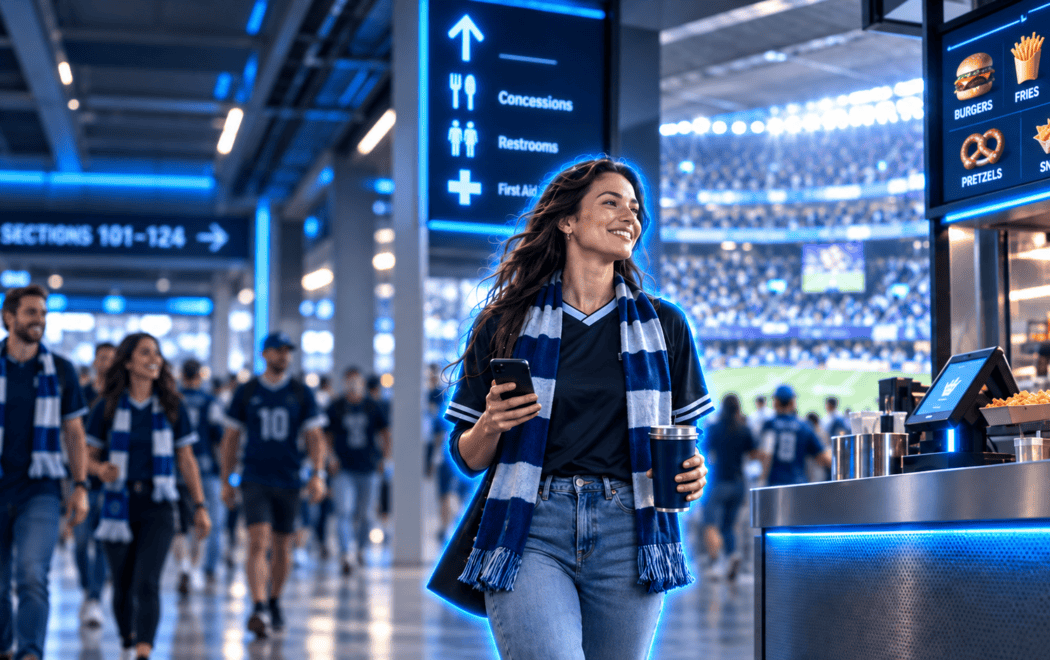
A traveler searching for a gate, standing in a queue or navigating a confusing terminal is less available to spend money. A fan searching for a seat, concession stand, restroom or exit faces a similar constraint.
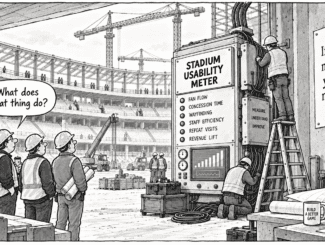
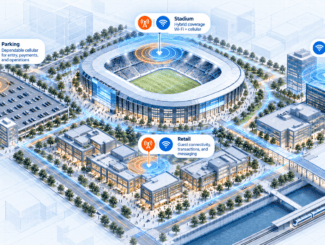
That broadens the conversation about usability beyond transaction speed. Wayfinding, connectivity, applications, signage, POS, entry systems and concessions can all either return time to the customer or consume it.
Checkout-free concessions provide one visible example. Faster transactions can increase throughput and reduce the amount of time fans spend waiting. But the airport research suggests operators may want to think more broadly about the cumulative effect of friction across the entire visit.
That raises a useful question for stadium operators: How much of a fan’s finite time in the building is actually available for experiences and transactions rather than navigation, waiting and problem solving?
One possible way to think about the issue is revenue per available fan minute. Rather than evaluating individual technologies solely by throughput, operators could examine how different systems affect the amount of usable time a fan has inside the venue.
The J.D. Power research does not provide a stadium benchmark, and the 74% airport spending difference should not be transferred directly to sports venues. It does, however, offer a current, large-sample example of something stadium operators have reason to examine more closely: when an experience becomes easier to navigate and use, customers may have more opportunity to spend.
Source: J.D. Power 2026 North America Airport Satisfaction Study. The study was fielded from July 2025 through July 2026 and was based on 24,710 completed surveys from U.S. and Canadian residents who had recently traveled through at least one airport in either country. (JD Power)