
When I first became a sports team CFO roughly 20 years ago, technology occupied a different place in the business. It was something you had to pull along. In sports terms, technology played mostly defense.
Today, technology runs through nearly every major system we operate, and the investment required to support it keeps growing. When something becomes that pervasive and consumes that much capital, simply working is no longer enough. It must contribute to the business in measurable ways.
Technology should push the business forward, not wait to be pulled along. It should play offense, too, helping the business grow revenue, operate more efficiently, and continuously find better ways of working, rather than simply supporting what already exists.
Getting there requires more than buying innovative systems. It requires an organization capable of choosing them well and using them effectively. In my experience, three things are critical if technology is going to push the business forward in meaningful ways: the right technology leader; C-suite peers in finance, operations, and revenue who understand what the technology can do; and alignment among all of them around the goals ownership wants to achieve.
Start with the right technology leader
The importance of technology leadership became concrete for me soon after I stepped into my current role in San Francisco. I normally prefer to spend time understanding the people and the organization before making changes, but I quickly realized that to reach our business goals, we needed a technology quarterback who wanted to throw downfield.
We had systems to run and risks to manage, of course, but we could not settle for simply doing those things well. For technology to push the business forward, we needed a leader who could bring ideas into the room, challenge the rest of us, and keep reimagining what was possible.
A leader like that creates a better problem. Instead of pulling technology along, you now have someone pushing more ideas into the business than the organization can reasonably pursue, given its constraints on time, energy, and capital.
I would much rather have that problem. That ambition is what gives technology the chance to lead, shaping how we grow the business, operate more efficiently, and continuously improve.
The responsibility then shifts to the rest of the organization.
The C-suite must understand what technology can do
Once technology starts pushing more possibilities into the business, the executives around the technology leader must understand enough to choose wisely among them. They do not need to know how to engineer the systems. They do need to understand what the technology enables, what it depends on, and how it fits with the rest of the business.
I learned that lesson the expensive way.
Earlier in my career, an organization I worked for spent millions of dollars building a highly advanced technical capability. From a technical standpoint, what we built was impressive, delivering performance far beyond anything that had existed before.
The business, however, could not really use it. It was not compatible with our existing systems or with our partners’ systems, and those could not be changed.
Our contractual and commercial arrangements did not line up with what we had built, either. Millions went into implementing the technology, and even more went into undoing nearly all of it.
Looking back, I question my own role. Perhaps I did not have enough authority at the time. Perhaps I was not yet as good at making sure the technology decision and the business decision were considered together. Either way, I needed a more holistic understanding of how the technology fit into our business.
I never forgot the lesson: not all technology is great, and not all great technology is right for us.
Technology can perform exactly as promised and still be the wrong investment if the organization cannot take advantage of what it enables. That is why the people making the business decision need to understand more than the price and the technical specifications. They need to understand how the technology fits the business around it, and what service model is required to deliver its capabilities.
Even when everyone understands the technology, another problem remains: different parts of the organization may still be optimizing for different outcomes.
Align around the goals and objectives, not the department
Poor alignment carries its own cost, and I have seen that firsthand as well.
In another case, we planned to spend many millions of dollars on a highly advanced video conferencing capability. On paper, the vision was impressive. We were designing capabilities and infrastructure well beyond anything that had existed before and, more importantly, well beyond what we needed.
We eventually recognized the mismatch, but not before spending a significant sum researching, designing, and building the front-end infrastructure. We were able to walk away before full implementation, but only after a material investment of time, energy, and capital.
I share responsibility for that outcome, too.
But the deeper problem was alignment. Technology, finance, and the commercial team were each doing their jobs, but in silos, rather than working together toward shared business goals.
That disconnect cost the organization significant capital. Perhaps more importantly, it consumed time, energy, and attention that could have gone toward far more productive investments. Had we evaluated the decision as a team, against the organization’s shared goals, before committing capital, we would have reached a different conclusion.
That is why alignment must happen around the economics of the whole business, not the objectives of any one department.
The test is business value
For an NFL owner, the two ultimate business objectives are winning on the field and increasing franchise value. Because club revenue is one of the biggest drivers of that value, the key question becomes where the organization can influence it.
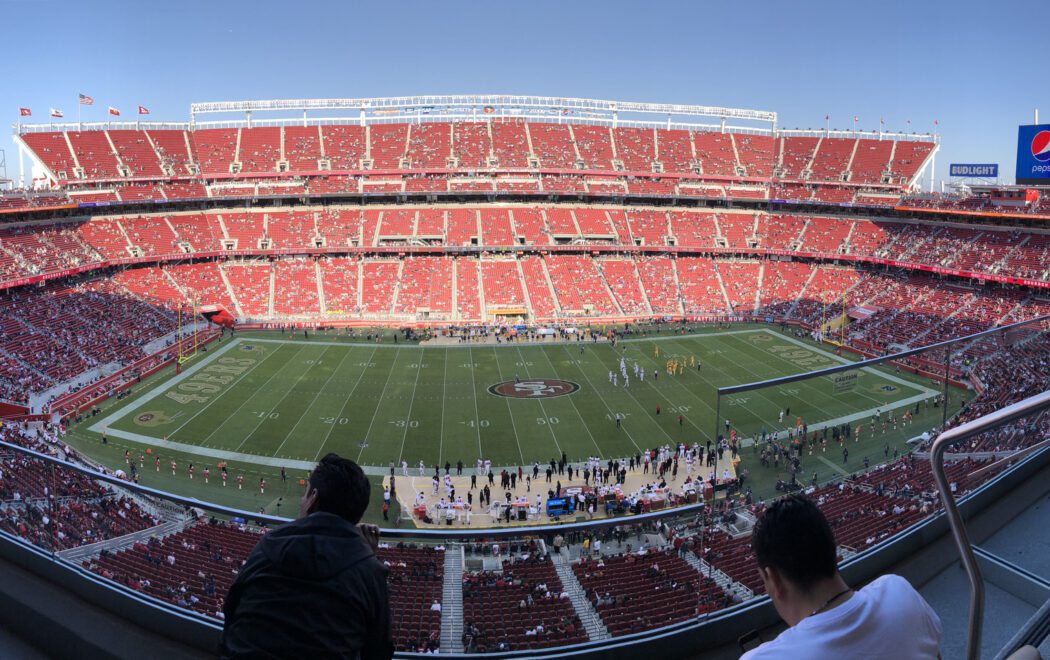
For our club, revenue falls into two broad buckets: national and local. National revenue is crucial, but it is driven mainly by the league. Local revenue is where a club has more ability to affect the outcome, and much of that opportunity revolves around the stadium.
Ticketing, premium seating, partnerships, food and beverage, digital engagement, and year-round events all contribute to stadium revenue. Technology enables nearly every one of those revenue streams, which puts it at the center of the stadium business.
But revenue is only one side of the equation. Technology can also make the venue more efficient to operate. Automation can reduce labor requirements. Better systems can simplify workflows, improve throughput, and lower operating expenses, expanding margins. In some cases, the value comes from generating more revenue; in others, from delivering the same experience with fewer resources. Growing the top line builds the foundation of the business, while greater efficiency produces the margin that funds reinvestment in even bigger ideas.
That is ultimately how I think about technology investment. Does it help us grow revenue? Does it improve the economics of operating the business? Does it support the broader objectives ownership is trying to achieve?
What it looks like when it comes together
Those two lessons shaped how we approached technology in San Francisco. As expectations on the business kept rising, we knew the existing model would not keep pace, so we rethought our technology organization from top to bottom. We looked at people costs and discretionary spending together, as one total cost of technology, rather than as separate budget lines.
Over four seasons, we shifted much of the work we had been outsourcing to in-house expertise, reducing our reliance on vendors. That allowed us to double the size of our team and significantly expand its capacity. We now respond faster, and we have built growing expertise in implementing new projects and platforms. We also built real redundancy, deeper leadership, and a stronger security posture. Just as important, we built a positive culture and a technology team that now works across departments rather than alongside them.
We did all of that while holding total technology expense growth to a compound annual rate of 0.5% over four years.
That result did not come from a single smart purchase. It came from treating technology as a business decision, made together, against the goals ownership had set.
None of that happens without all three pieces working together: a technology leader willing to keep pushing ideas forward, C-suite peers who can evaluate those ideas effectively and collaboratively, and alignment around the goals ownership cares about most.
When those pieces are in place, technology does more than keep the operation running. It helps create franchise value and fuels the next wave of growth.