
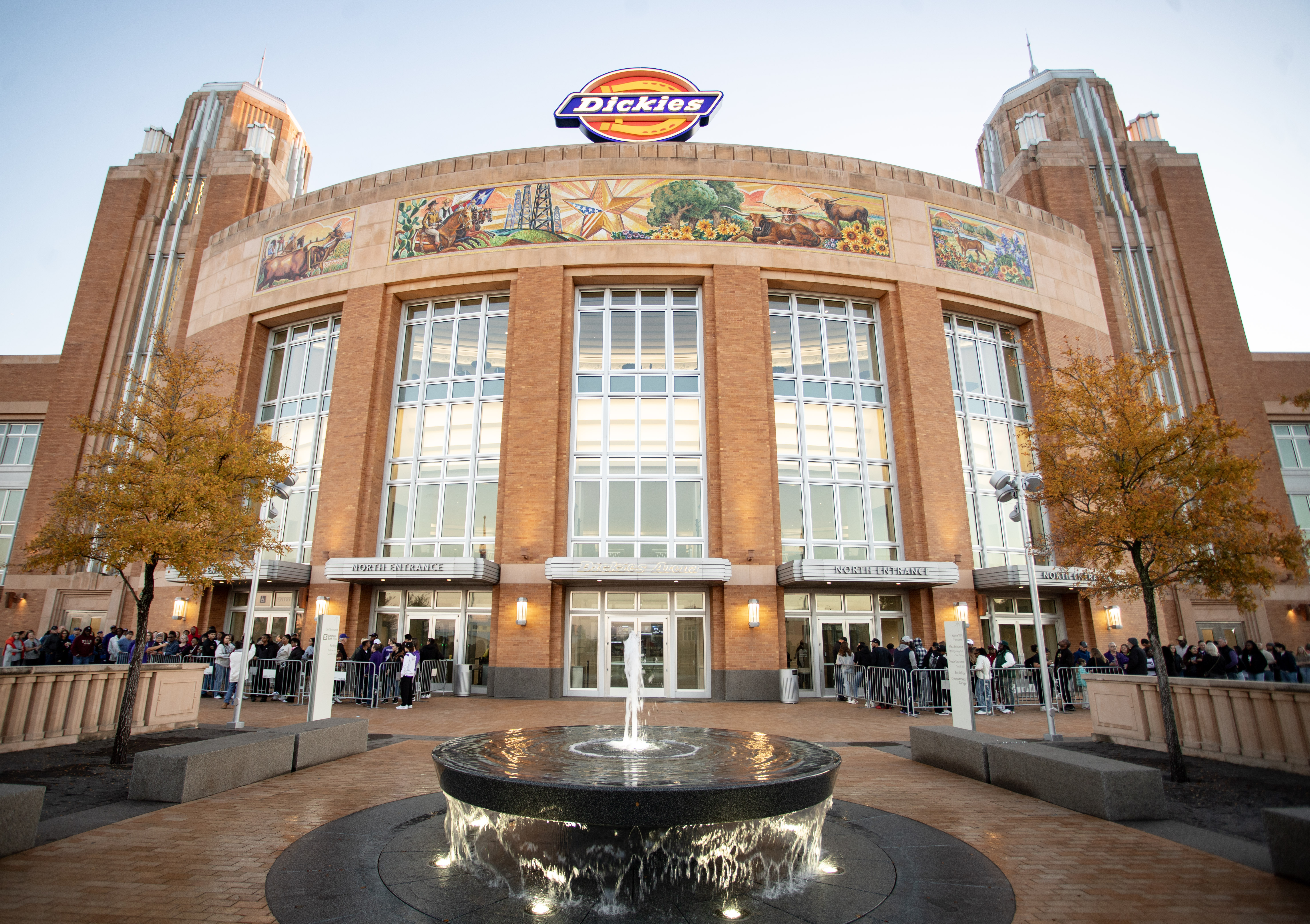
Dickies Arena has completed a major upgrade to its in-venue Wi-Fi network as part of a broader effort to support year-round utilization, flexible floor configurations, and premium fan experiences. The new system officially went live during the Fort Worth Stock Show & Rodeo, one of the venue’s largest and most operationally demanding annual events.
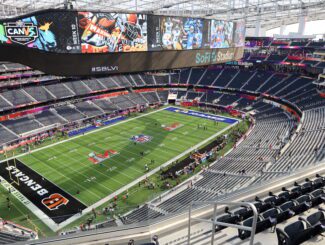
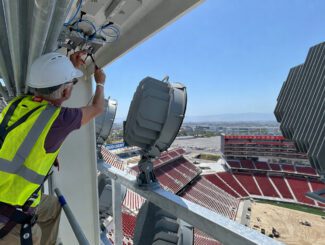
The upgraded network replaces a traditional Wi-Fi architecture with an overhead, hyper-directional design spanning the seating bowl and arena floor. By tightly shaping RF coverage patterns from above, the system is designed to improve network efficiency and consistency in high-density environments where thousands of devices are active simultaneously.
Designing for Floor Flexibility and Premium Experiences
Beyond its role as the home of the Fort Worth Stock Show & Rodeo, Dickies Arena operates as a high-utilization venue, hosting well over 150 events annually. The calendar includes national touring concerts, sporting events, family shows, and private and civic gatherings—many of which require frequent floor reconfiguration and the addition of premium and VIP seating on the arena floor.
“At Trail Drive Management Corp., we are very excited to continue our re-investment of best-in-class guest experience at Dickies Arena. Now, whether guests use Verizon or AT&T and are connected to the in-arena cellular system or connected to the new state-of-the-art free Wi-Fi, we are confident all guests can capture and share unforgettable moments from concerts and family shows to sporting events and all our other world-class events in real-time. From design to implementation, our partnership with Ampthink ensured the project was ready for the start of the 130th Fort Worth Stock Show & Rodeo, delivering a seamless transition from our legacy under-seat Wi-Fi enclosures, ” said Chief Technology Officer Andrew Schmidt.
Efficiency, Capacity, and Business Outcomes
While Wi-Fi coverage is no longer the primary challenge in most modern arenas, efficiency has become a defining constraint. Hyper-directional antennas enable tighter RF separation between coverage zones, allowing for greater channel reuse within a fixed spectrum environment. In practical terms, this allows the network to support more simultaneous activity with fewer performance issues, reducing the operational burden of peak-demand events while enabling consistent service across changing venue layouts.
AmpThink designed and built the upgraded wireless system for Dickies Arena, with a focus on ensuring the network could support the venue’s operational and commercial goals.
“The goal was to design a network that supports Dickies Arena’s business objectives,” said Wesley Terry, AmpThink Network & Wireless Architect. “Using a hyper-directional approach as part of the overall design allows the network to operate more efficiently, lowering operating overhead (compared to the legacy under seat design) while reliably supporting mobile content and mobile commerce at every event, from rodeo to basketball to concerts.”
Reflecting a Broader Industry Shift
The deployment at Dickies Arena reflects a broader transition underway across large public venues. Over the past several years, overhead hyper-directional Wi-Fi has moved from early adoption to mainstream use, appearing in both new builds and major retrofits.
Before the adoption of overhead, hyper-directional designs, arena floor seating—often occupied by a venue’s highest-paying patrons during concerts and premium events—has historically been one of the most difficult areas to serve with reliable Wi-Fi. Coverage gaps and inconsistent performance on the floor have been a common challenge across the industry, not unique to Dickies Arena.
For high-utilization arenas like Dickies, the shift underscores a larger change in how connectivity is viewed: less as a fan amenity, and more as core infrastructure that enables modern venue operations.