
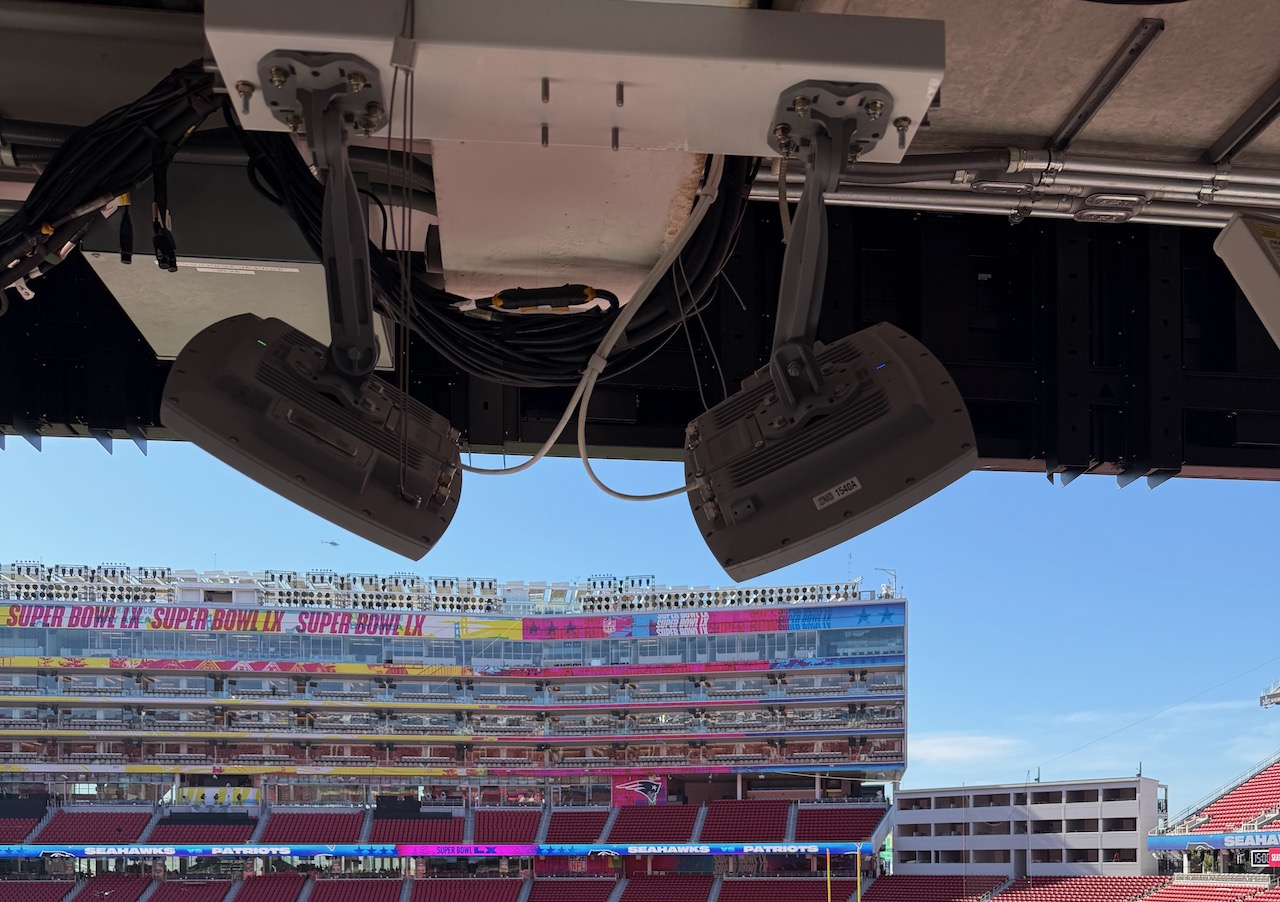
The strategy of building a Wi-Fi antenna for specific stadium long-distance connectivity needs is paying off for networking giant Cisco.
Since Cisco introduced its stadium-specific wireless solutions, nearly 25,000 units have been deployed, including the new CW9179F, which has seen the fastest ramp of the Wi-Fi 7 generation. Cisco’s line of Wi-Fi antennas that support the innovative features of longer-distance connectivity and adjustable beam focusing are already replacing more traditional “proximate” designs of under-seat or handrail antenna placements.
According to Cisco customers, the hyper-directional antennas are the better choice based on the systems’ unique performance abilities and the ease of installation. Lower deployment and administrative costs associated with the hyper-directional products are also desirable.
Thanks to Cisco, hyper-directional antennas are the leader of new deployment trends at stadiums of all shapes and sizes. This technology is replacing existing Wi-Fi designs in stadiums to provide better coverage at a lower cost. It’s a great option for new deployments in venues that previously could not cost-justify expensive under-seat or handrail designs. And in vertical markets outside of stadiums, customers are turning to hyper-directional antennas to solve specific needs, including long-distance connectivity issues in public outdoor spaces like college campuses.
What are hyper-directional antennas, and why are they important to venues?
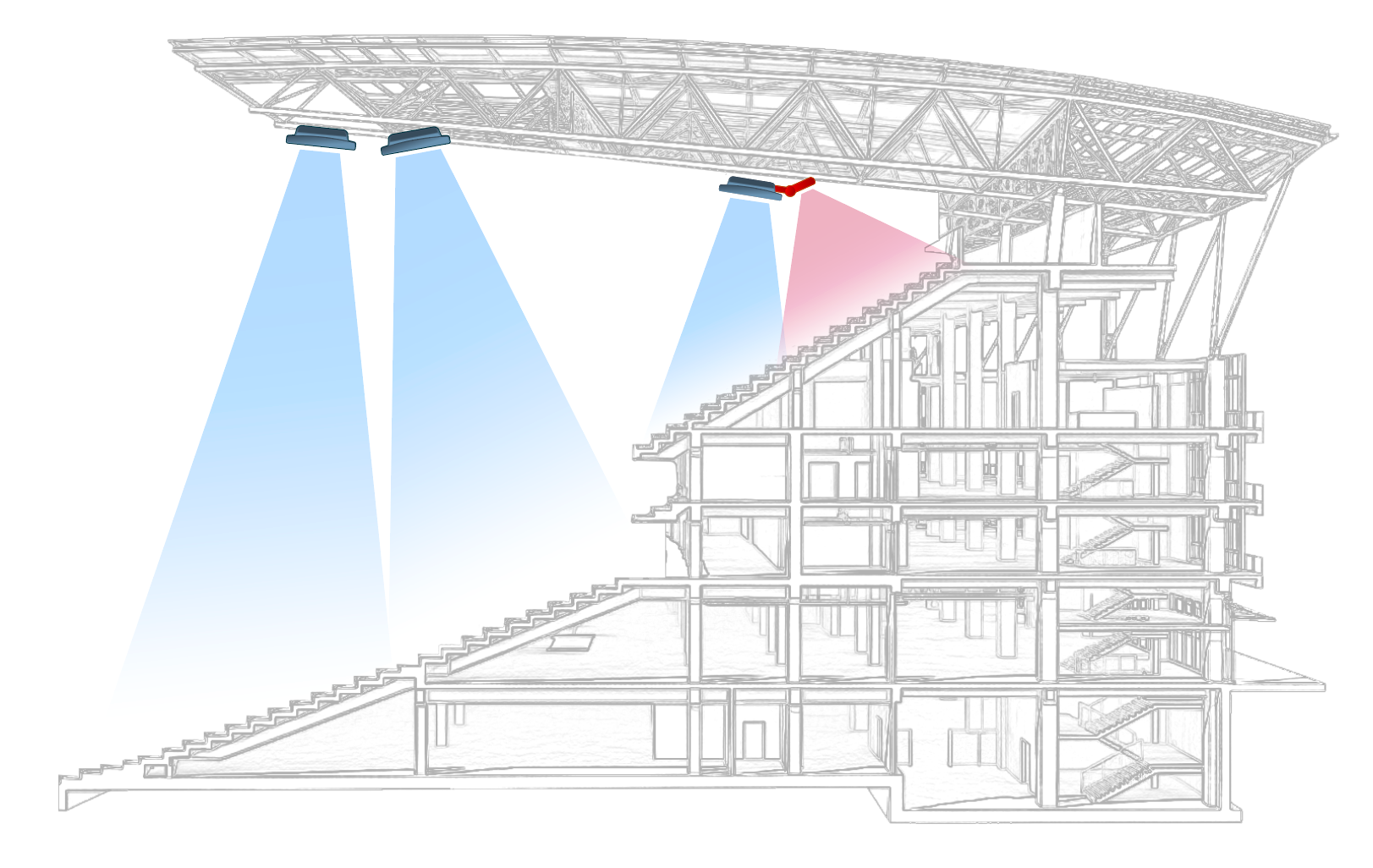
The Cisco CW9179F directional antenna can dynamically shape and control RF coverage using selectable antenna modes such as boresight, wide, and front and back, allowing the access point to precisely target high-density client areas while limiting interference outside the intended coverage zone. The area highlighted in red represents a rear facing coverage element that allows the signal to extend behind the antenna so users behind the mounting position can still receive reliable wireless coverage.
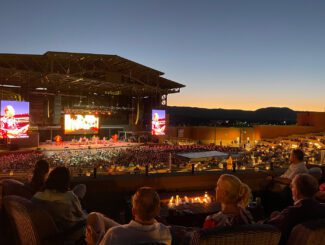
For venues that have already installed them, including Levi’s Stadium in Santa Clara, Calif., Georgetown University, Capital One Arena in Washington, D.C., and BottleRock Napa Valley, hyper-directional antennas are proving to be the missing link that was previously sought in stadium network design. Instead of trying to improve performance by bringing antennas closer to users, the extended reach and support for “hyper-directional” tuning allows hyper-directional antennas to simply deliver a better service to the user while also delivering cost and efficiency benefits to the stadium owner.
The long reach feature alone is a huge ROI factor for hyper-directional antennas. By mounting antennas in ceiling or dome infrastructure, hyper-directional deployments can provide direct coverage to the highest levels of premium seating. This typically means the seats near the court or pitch, or for concerts, on the main floor itself — areas where proximate design coverage can fall short.
The ability to deploy hyper-directional antennas in overhead infrastructure or on higher back walls also cuts deployment and administration costs, compared to other deployment methods. Proximate designs for under seats and handrails, for instance, involve more work for maintenance and cleaning. Under-seat designs also require extensive administration for deployments in moveable seating sections in arenas.
How stadium network design followed antenna capability
Historically, most venue Wi-Fi access points (APs) and antenna placements were top-down, with antennas typically mounted on the underside of seating platforms or other overhangs. As an initial strategy, top-down made sense. This is because such deployments had the benefits of being close to power, easier to connect to a network conduit, and offered the best aesthetic choice, being out of most fans’ view.
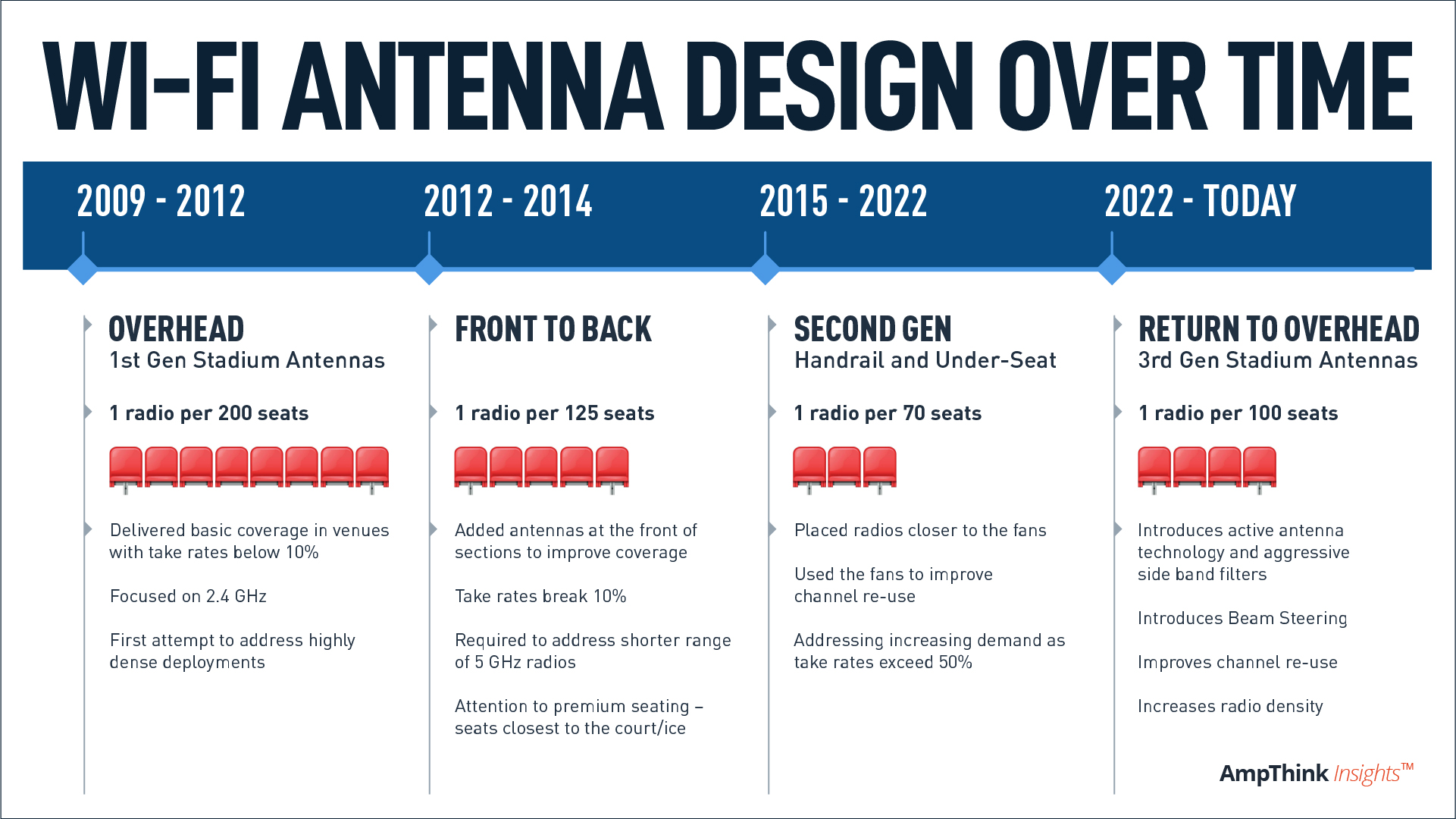
However, top-down could only provide coverage where there was an available overhang or structure somewhat close above the desired seating area, since the effective distance of the antenna products was still about 75 feet. And interference issues often required power settings that kept most venue Wi-Fi antennas well below that theoretical maximum.
To cover open-bowl seating areas, new design strategies emerged, including under-seat and handrail antenna placements. While such proximate designs did improve coverage by bringing antennas closer to users, they came with higher deployment and management costs. They also had their own set of performance limitations, due mainly to the need to balance interference and communication-distance challenges. And even these designs couldn’t answer the need for coverage on an arena or dome floor for concert seating, a need typically addressed by temporary antenna placements that were difficult to manage and produced less than optimal performance.
Cisco embraces and improves hyper-directional
In 2017 a company called Everest Networks, a subsidiary of Panasonic, introduced a product that coupled a highly directional antenna array with RF filters to build a device that worked with a distance of up to 200 feet from the connecting device. But the solution was constrained by limited features and overall design (which included separate antenna and access point components), and it never gained significant sales traction.
In response, Cisco developed its own version of a hyper-directional Wi-Fi antenna, one that combined the technical advances of antenna gain and RF filters with a best-in-class Wi-Fi feature set. Cisco also built a Wi-Fi access point directly into the device, eliminating the need for extra work to install and deploy separate AP and antenna gear.
Unveiled in 2021 with its first deployments at Allegiant Stadium in Las Vegas and at the BottleRock Napa Valley music festival, the Cisco 9104 proved the benefits of hyper-directional antennae with its combination of technical innovation and enterprise management features.
With its extended connectivity reach, the Cisco 9104 proved its worth in multiple ways.
At soccer venues, its ability to provide high-density coverage to all seats below a single overhang led to significant cost decreases when compared to a strategy of putting antennas under seats. For arenas, the new hyper-directional antennas provided full Wi-Fi coverage to courtside seats and the venue floor, finally bringing the top fan amenity to the highest-priced concert seats. They also allowed venues to replace under-seat antennas in moveable seating sections with simpler overhead coverage.
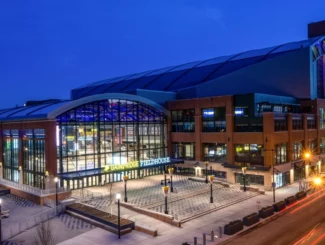
For venues of all shapes and sizes, the ability to more easily deploy and manage antennas from the out-of-sight catwalks also eliminated the costs and time needed to clean and administer the numerous under-seat enclosures. Deployments included soccer-specific stadiums like Geodis Park in Nashville to large NFL venues like Allegiant Stadium, to arena-sized venues like UBS Arena in Elmont, N.Y. and Gainbridge Fieldhouse in Indianapolis.
This new versatility and accessibility for Wi-Fi in premium areas of different types of venues led to the Cisco 9104 becoming a sales success with rapid growth over a period of three years. According to Cisco, they sold hundreds of the Cisco 9104 devices in fiscal year 2021, followed by more than 4,000 in 2022 and more than 6,000 in 2023.
The problems with proximate
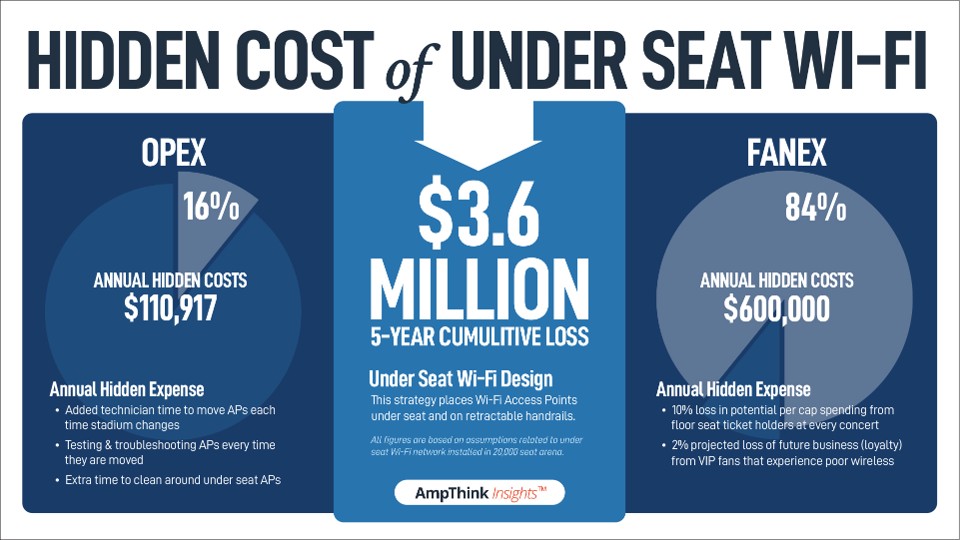
While proximate network designs have become a standard method in recent years, the high costs of deployment and operation of such designs have limited their adoption, especially in smaller stadiums and arenas. When you combine upfront costs that can include core drilling of concrete floors and time-consuming cleaning operations with the inability of proximate designs to cover arena-floor seating areas, the hidden costs of proximate in a small arena can be simply unacceptable.
A hyper-directional deployment, however, can cover both the seating bowl and the venue floor without requiring any core drilling or under-seat cleaning or management costs. Having the AP built into the device also increases the ease of deployment, especially when installers may not have a lot of experience in connecting disparate Wi-Fi gear components. For hyper-directional deployments, the capex and opex savings scale with size, making it a good fit for a greater number of venues.
And while the combination of dense coverage (from the multiple radios in each hyper-directional device) and length of connectivity are prime selling points for stadium customers, the extended reach alone also makes the Cisco devices attractive to other verticals.
College campuses, for example, can use hyper-directional antennas to cover the public spaces between buildings as students walk to class. Conference centers and retail locations with large, enclosed spaces with high ceilings are also finding use for Cisco’s hyper-directional products, thanks to the connectivity reach.
Innovation continues with new Cisco hyper-directional antenna
On the sales front, an industry tug of war currently persists between underseat and overhead Wi-Fi deployments. The most aggressive promotions for continuing proximate designs seem to come from providers who don’t have a hyper-directional offering that can compete directly with Cisco.
As other Wi-Fi gear providers are only just getting started with hyper-directional technology, Cisco is building on its initial success by offering the second generation of its line, which was released last year.
The new antenna, which goes under the Cisco numbering system as the CW9179F, has a 6 GHz radio that gives it access to the 1,200 MHz of new unlicensed spectrum in that band for U.S. markets. By being compliant with the new Wi-Fi 7 standard the antenna also supports both indoor and outdoor use under the Wi-Fi 6E FCC rules.
The 9179 starts out as an indoor unit but can be easily converted to an outdoor unit. This is via an “environment pack” that can be added on the back of the device that includes all the necessary chips and communication needed for the automatic frequency coordination (AFC) required for outdoor 6 GHz use. This feature allows venues to save costs by potentially moving the antenna from an indoor or outdoor placement as needed.
In addition to the new 6 GHz radio, the 9179 includes Wi-Fi 7 compatible 5 GHz radios and a 2.4 GHz radio, along with another radio for IoT. It also adds the ability to reconfigure some of the radios to aim coverage out the back of the antenna, to cover seating areas directly behind the device. According to Cisco there are four N connectors on the unit that can be used to switch one of the 5 GHz radios and the 2.4 GHz radio to and augment coverage behind the AP.
“When you deploy on an overhang, you often get a hole of coverage left behind you,” said Matt Swartz, a Cisco Distinguished Engineer and thought leader behind the 9104 and 9179 product lines. “Adding small antennas allows venues to cover the much-closer top-row seats from the back of the 9179 unit instead of having to install a separate device, saving the cost of purchasing more antennas.”
The newer 9179 antenna is also smaller and lighter than its predecessor, and has a simplified set of configuration options, which Swartz said will help increase the ways customers can use the device. The new hyper-directional antenna also includes an accelerometer, which can provide tilt and angle information for remote management.
“We took everything we learned in developing the 9104, and improved it,” said Swartz. The new version, he said, “exceeds performance of the older one in every category.“
Sales numbers prove Cisco’s strategy
Just like its predecessor, the new Cisco 9179 antenna is off to a strong sales start, with more than 8,000 units sold since its debut in June 2025. Combined with the historic total of nearly 16K units sold of the Cisco 9104, Cisco has now sold nearly 25,000 of its hyper-directional antenna products.
With more than 15 patents registered so far for its hyper-directional products, Cisco has also won industry acclaim. According to Cisco, the 9104 has won the “Best Enterprise Wi-Fi Solution” award from Wi-Fi NOW, and the “Best Wi-Fi Innovation” award and the “Best Enterprise Wi-Fi Network” award from the Wireless Broadband Alliance. Not to be outdone, the 9179 has already won “Best Wi-Fi Deployment Solution” from Wi-Fi NOW and “2026 Innovation of the Year” from The Wi-Fi Awards.
As the sales numbers and industry awards prove, Cisco built on the hyper-directional antenna concept and delivered a category-defining product, one that users are continuing to find new ways to employ. With improvements realized from customer feedback, Cisco’s continued evolution of the hyper-directional technology is establishing a new paradigm for venue Wi-Fi network design.