

Technology runs through every part of a modern sports organization. It supports the business office and the coaching staff. It runs the venue, drives the fan experience, and underpins most of the systems that generate revenue. As a result, it is also something that everyone in the organization touches, influences, or makes decisions about, whether they think of themselves as technology decision-makers or not. The sponsorship team negotiates partnership deals that carry technology exclusivity clauses. Department heads select software platforms for their own workflows. The COO negotiates the purchase of security technology. Each of those decisions is reasonable within its own domain. The challenge is that in most organizations, while everyone has good intentions, no one has full visibility. Connecting the dots is critical.
The result is a coordination gap that creates unnecessary expense, missed revenue opportunity, and strategic risk. These issues tend to compound quietly until they become visible at the worst possible moment. In the normal course of operations, many organizations endure this gap, knowingly or unknowingly, as a cost of doing business. Major capital projects such as a new venue, a major renovation, or a significant technology refresh introduce a scale and complexity of decisions that the existing structure was not designed to absorb. This is where the coordination gap becomes genuinely costly, and where a technology owner’s rep can be useful.
A technology owner’s rep plays three roles but has one mandate
A technology owner’s rep operates simultaneously in three capacities, each addressing a different dimension of the coordination gap. As an advisor, the rep protects and advances the owner’s technology interests, with no vendor allegiance and no departmental bias. As an ally, the rep extends the capacity of the organization’s internal technology leadership, providing cross-functional visibility and support that is difficult for internal staff to sustain without help. And as an asset, the rep delivers tangible value through procurement expertise, vendor relationships, scope management, and project oversight. Together, these three facets define a role that takes direct responsibility for technology governance, filling the accountability gap that distributed decision-making inevitably creates.
Advisor: representing the owner from the boardroom to the construction site
The primary function of a technology owner’s rep is to sit on the owner’s side of every technology conversation. They have full visibility into commitments being made across the organization and the independence to act on the owner’s behalf.
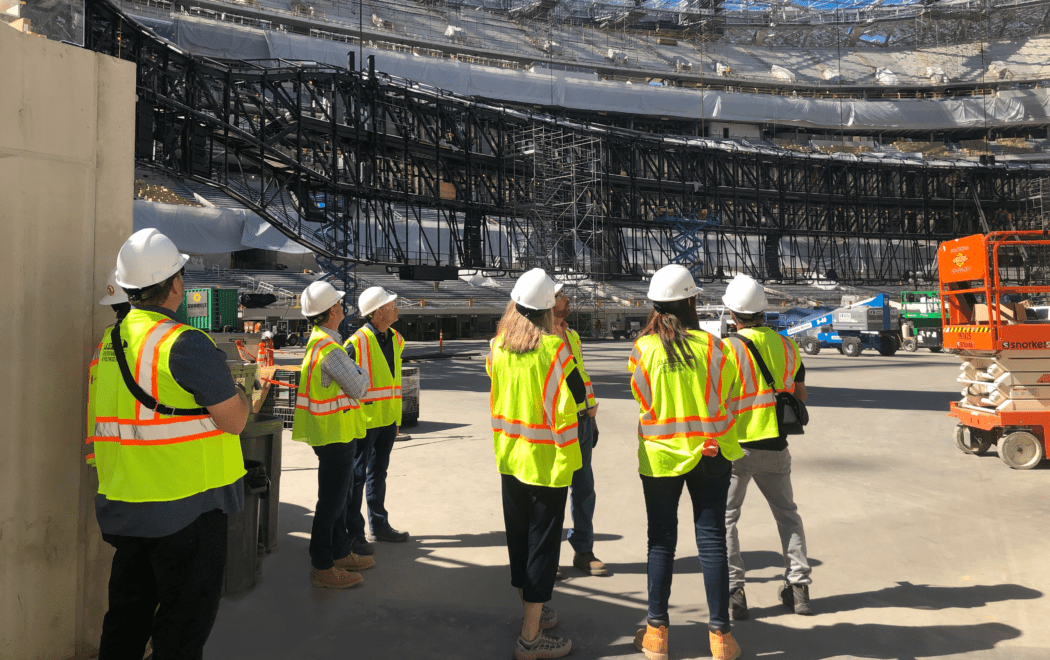
The value of a technology owner’s rep is obvious in standard business meetings, but it can show up in subtle ways, too. For example, I was on a construction site where the AV team and the civil engineering team were in the same job trailer. Each team was waiting on a scheduled meeting to resolve a coordination issue between their scopes. The meeting was a week away. This was an unnecessary delay. So, I walked across the trailer, introduced the relevant parties, and the issue was resolved the same afternoon. One week of schedule was recovered before it was lost. That is the advisor’s function in its most practical form: a macro level view, present, attentive, and empowered to act before small problems become large ones.
The same principle applies at much higher stakes. On another project, my client was an executive on the venue side. He had had a real estate development background but had never built a sports venue. The procurement process was already underway when I came in. Working alongside the construction owner’s rep, we evaluated the vendors that had already been selected, validated the scope, and found two similar vendors with overlapping responsibilities around a major technology system where nobody had yet figured out where one scope ended and the other began. Untangling that overlap and redirecting the project toward partners and solutions the team would not have found on their own was key. Looking across the entire project and connecting dots that were being missed, I was able to help the ownership group save money, refine schedules, and improve system performance.
Ally: extending the reach of internal technology leadership
The technology executive at a professional sports property carries an unusually broad portfolio. That person is responsible for the systems supporting business operations, the platforms serving coaches and performance staff, the infrastructure running venue operations, and the technology underpinning every commercial and fan-facing product the organization offers. It is a wide mandate in ordinary circumstances. During a major capital project, it expands further, into infrastructure decisions that will shape stadium performance and fan experience for the next twenty to thirty years. This extra workload can put significant stress on the technology leader.
Into that pressure, the introduction of a technology owner’s rep can land the wrong way if ownership does not frame it correctly. A technology leader who is already stretched may read the arrival of an outside resource as a signal that their judgment is not trusted, or that their role is in question. That reaction is understandable. However, it is the job of the owners’ rep to add bandwidth, increase capacity, and make that executive look like a hero. In my career I have worked on all sides of technology transactions, as a vendor, as a consultant, and as an operator. I speak from experience when I stress the importance of understanding the human side of this business situation.
A technology owner’s rep is intended to be an extension of the team. No single technology executive should be expected to hold deep expertise across wireless infrastructure, enterprise software, point-of-sale, access control, broadcast systems, and AI readiness simultaneously while managing vendors, internal stakeholders, and a construction timeline. The role exists because the scope of the problem is genuinely large, not because any individual has fallen short. When ownership communicates that plainly and positions the technology owner’s rep as a resource to draw on rather than a check on their authority, the dynamic shifts. The internal executive gains bandwidth and cross-organizational influence. The technology owner’s rep gains a knowledgeable partner. The owner gets better outcomes from both.
The ally function takes a different form for smaller or younger organizations that have not yet hired internal technology staff before a stadium project begins. In such cases, a technology owner’s rep can serve as interim technology leadership during a build, providing the strategic oversight the organization needs while helping to define the permanent role. On one recent project, my clients were able to defer bringing on a full-time CTO precisely because I was filling that function during the build. That gave them senior technology leadership capable of running a fast-moving project without having to hire permanent staff. This is one of the more tangible financial benefits of the engagement model, and it points directly to the third role the technology owner’s rep plays, that of an asset.
Asset: lowering costs and improving returns
A technology owner’s rep brings something to every project that internal resources sometimes lack in sufficient depth: experience negotiating with industry vendors across diverse projects and various leagues over many years. Having a history with the companies and people in the industry changes the dynamic at the table. Knowing how a particular vendor has performed on comparable builds, where their proposals tend to be strong, and where they tend to overstate what a realistic scope looks like and what padding looks like produces better outcomes than any single organization can typically achieve negotiating from a standing start.
I recently joined a project where the procurement process was already underway but misaligned. I evaluated the vendors that had been selected, validated the scopes, and found that the owner had engaged two similar vendors with overlapping responsibilities. Because I had worked with that category of provider across previous builds, I understood where scope creep typically entered those engagements and how to draw the line between the two. That knowledge, combined with relationships built across years of working with the same vendor ecosystem, made it possible to redirect the project toward partners and solutions the team would not have found on their own, and to surface revenue opportunities and efficiencies that had not yet been considered. As a result of this intervention, the project arrived at opening day on more profitable footing.
When and how to engage
A technology owner’s rep can add value at any stage, from ongoing operational governance through major vendor negotiations to new construction.
Some owners engage a technology owner’s rep from the outset of a major project, ensuring that technology strategy develops alongside the design and that every crucial decision reflects the owner’s long-term interests from the beginning. Others bring a rep in mid-stream to assess work already in progress, identify overlapping vendor scopes, surface procurement gaps, and redirect the project toward better outcomes before those issues compound. In either case, the rep provides the kind of independent, experienced oversight that can keep a complex technology project on schedule and on strategy. The earlier the technology owner’s rep is engaged, the more value they can bring.
Regardless of when they begin, technology owner’s rep engagements do not necessarily end at opening day. Technology deals are increasingly structured on two- and three-year cycles, which means renegotiation conversations begin as soon as a system is operational. Having a flexible resource available for those conversations, someone who was present for the original procurement and understands what was agreed and why, is a meaningful advantage. The engagement scales down after opening but rarely disappears entirely, because the underlying coordination challenge does not disappear either.
Technology reps provide specialized help that most owners need
As successful business leaders, sports property owners already understand the value of specialized expertise. They hire architects because building design demands deep, specific knowledge. They engage structural engineers, financial advisors, and legal counsel for the same reasons. Technology has reached the point where it warrants the same consideration. It runs through every revenue-producing system in the building, shapes the fan experience, and determines what the organization can do operationally for decades. Getting it right reduces cost and opens revenue opportunity. Getting it wrong is expensive.
A strong internal technology champion remains important for most venues. The technology owner’s rep does not change that. This allows for the internal technology team, and the owner, a better foundation for the decisions that matter most, particularly when the scale and complexity of a major project exceeds what any single internal resource was positioned to cover alone.
As the volume and velocity of technology projects continues to accelerate, the owner’s exposure to unnecessary risk, delays, and expenses increases. And when everyone owns technology decisions, no one wins. The technology owner’s rep is the role that changes that.